
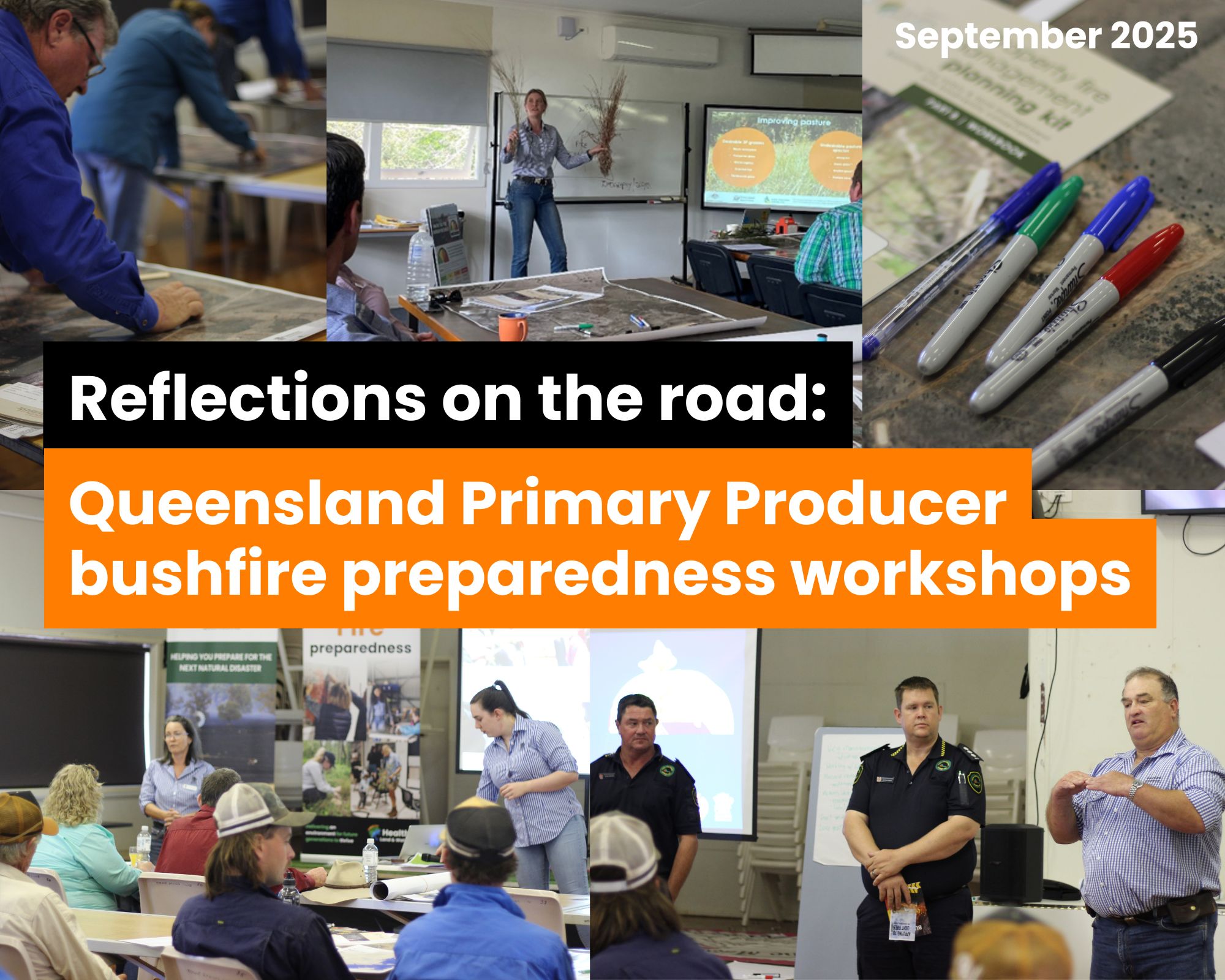
Mapping for regional resilience: bushfire preparedness workshops empower primary producer communities
Slotting in just in time before the 2025 bushfire season kicked off, the Healthy Land & Water team had the very rewarding experience of running a week-long workshop series with the Department of Primary Industries and Rural Solutions Queensland.
Read more from Hannah Etchells, Environmental Project Manager & Fire Ecologist - Healthy Land & Water, who jotted down her reflections from her time on the road for this workshop series.
With five Property Fire Management Planning workshops over five days, from Monto in the North Burnett region down to Dalveen in the Southern Downs, it was a mammoth undertaking that involved 84 primary producer landholders, mapping of 82 properties, totalling a massive 33,519 hectares of land that now has a fire management plan.
Renee Ould from our Sustainable Agriculture Team and I delivered the first three workshops in Monto, Gayndah and Durong. The amazing conversations we’ve had in these workshops really showcased how committed people are to collectively building resilience in their communities
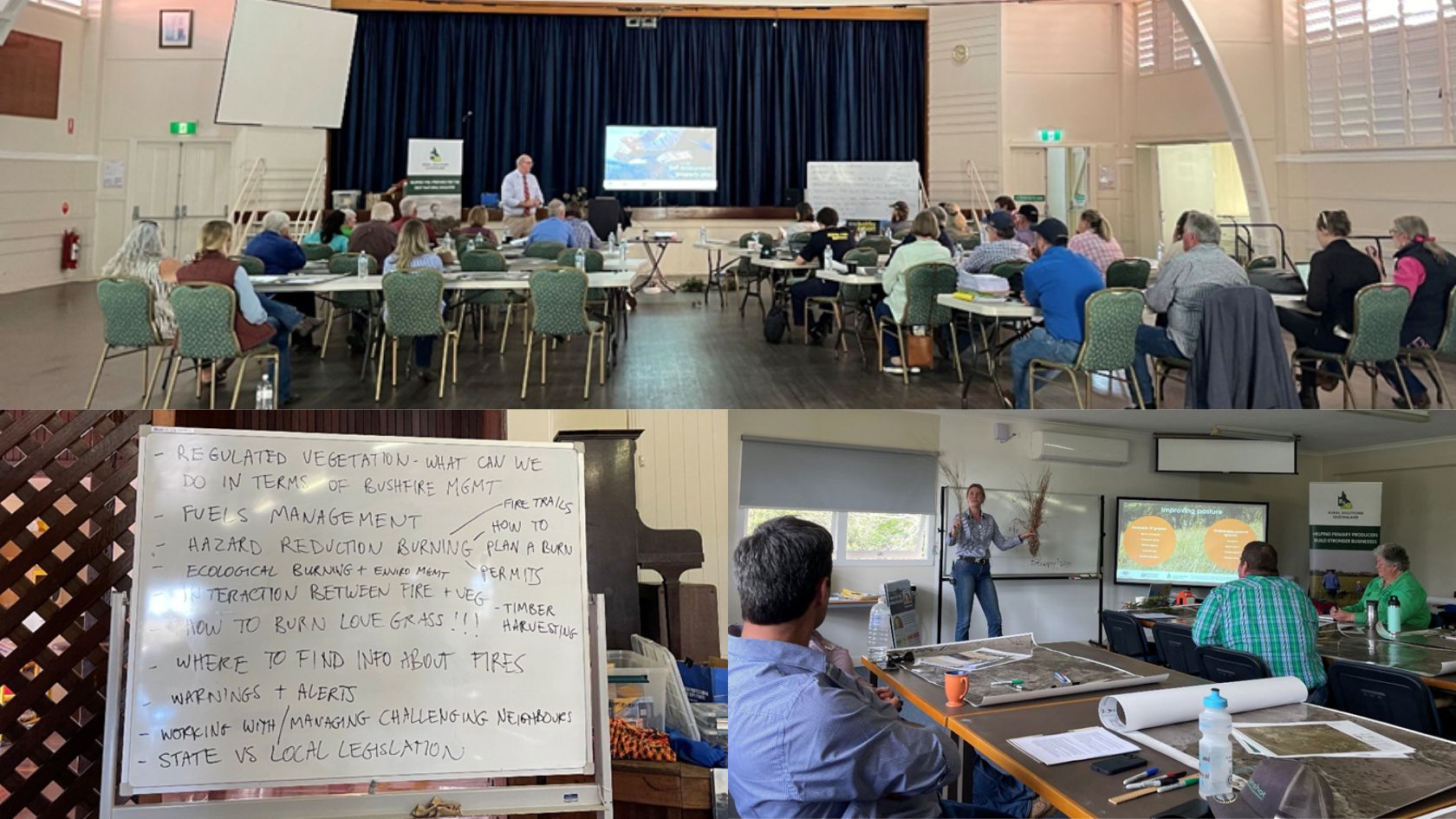 Our favourite thing about spending time in the North and South Burnett regions is the people we get to meet and the insightful, fascinating, challenging and heartwarming conversations that end up happening.
Primary producers in these regions are some of the kindest, welcoming and resilient people you’ll ever meet. From stories of past fires and droughts, planned burns gone right (and sometimes not-so-right) and the impacts on soil health and pasture health, to collective frustration around weeds, regulations and neighbourly relations, the discussions at each workshop were lively and insightful.
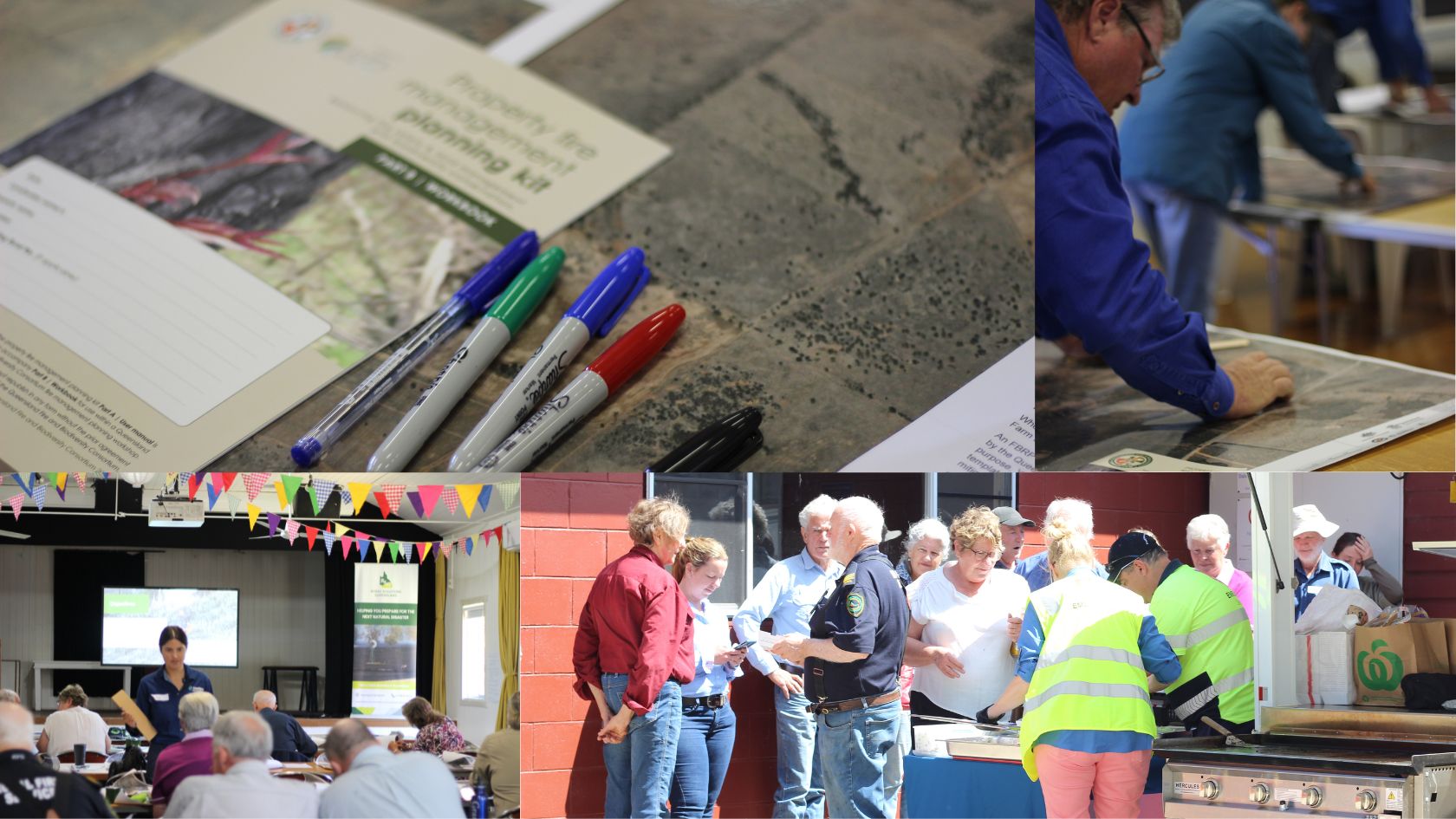 Mapping important infrastructure collaboratively with the community.
Attendees found that learning from each other was equally as beneficial as the important information shared from industry and subject matter experts in the room. Common remarks from landholders in their feedback highlighted their increased understanding of cool burning and mosaic burning and how to apply it, appreciation for the large-scale maps, and the opportunity to network and feel more connected with their community.
A comment from one attendee that really struck me was “I think this has kept me more present in my decisions around controlled burning”. While developing a fire management plan can sometimes feel like a box-ticking exercise, the experience changes in the right setting. Being in a room with neighbours and fire practitioners, where candid discussions, collective problem-solving, and respect for different perspectives are encouraged, can transform the process. It becomes what it’s truly meant to be: a holistic, long-term plan to help keep people, livestock, and the environment healthy and resilient.
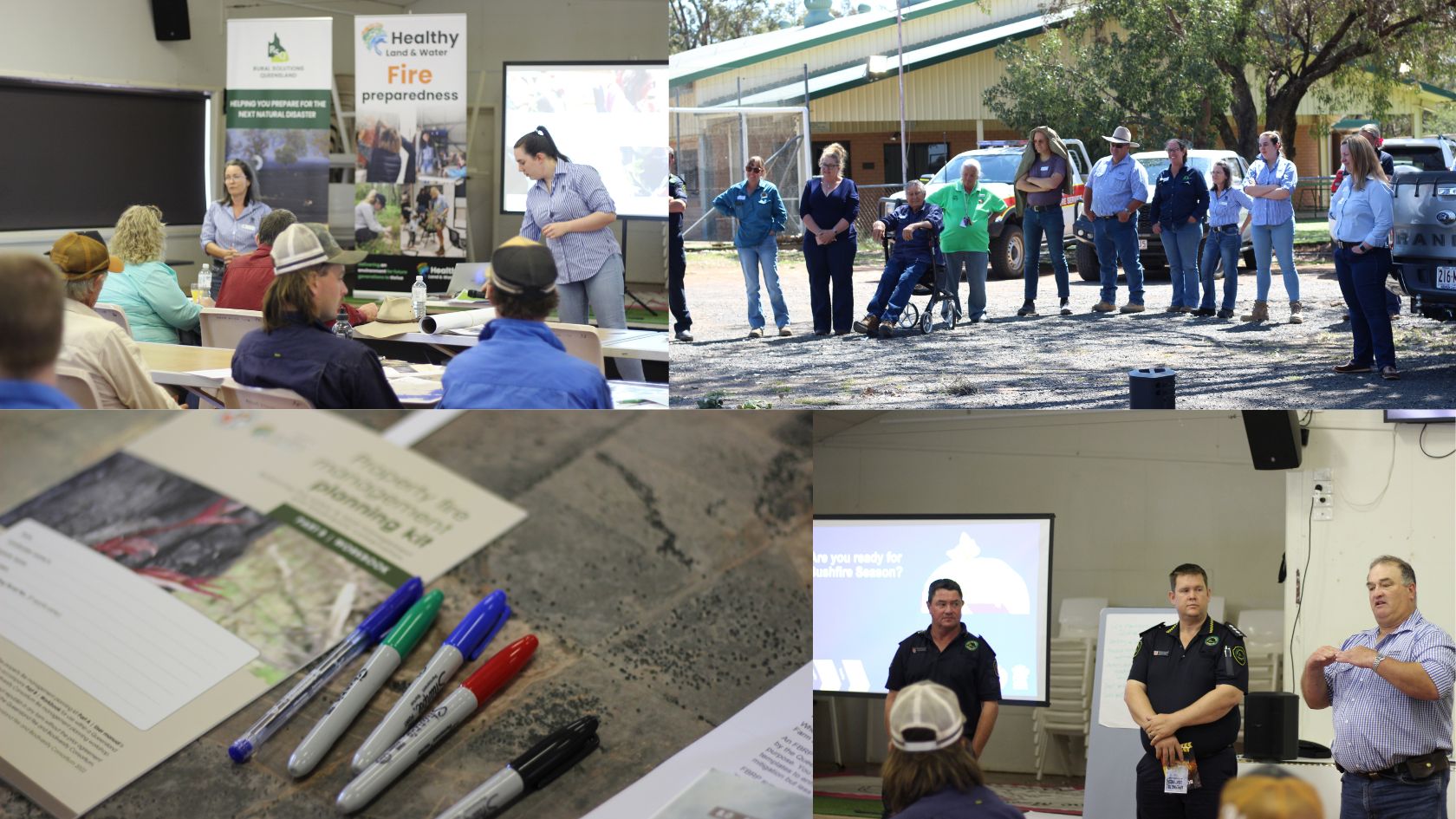 Big thanks to every enthusiastic participant in the room with us, and for sharing your commitment to boosting community-wide resilience.
The delivery of these workshops was supported through the Industry Recovery and Resilience Officer program, jointly funded by the Australian and Queensland governments under the Disaster Recovery Funding Arrangements (DRFA).
By Hannah Etchells, Environmental Project Manager & Fire Ecologist


