
Wildlife recovery surveys inform fire strategy in Emu Vale
Five years after the devastating Black Summer bushfires of 2019–2020, Queensland flora and fauna species are still slowly recovering. In collaboration with the Australian Government and various dedicated groups, we’re doing a pulse check on various wildlife species that were affected by these bushfires.
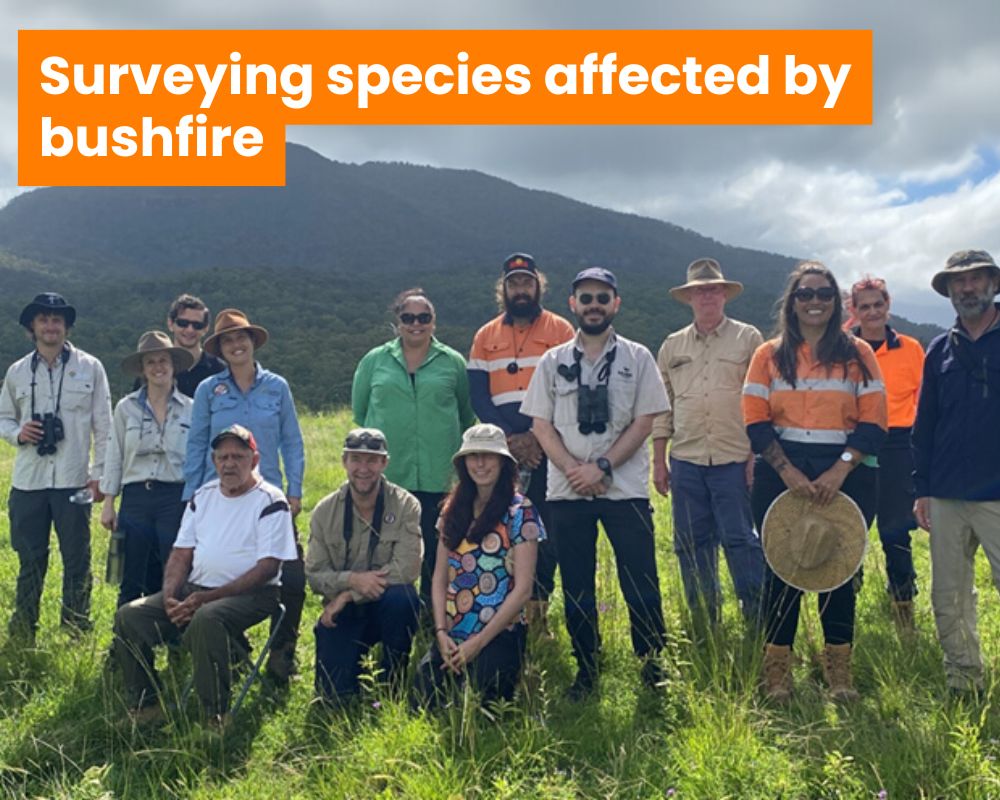
As part of the Emu Vale Fire Management Strategy, funded by Healthy Land & Water and the Australian Government’s Black Summer Bushfire Recovery Grant Program, the QFBC team completed a series of targeted wildlife surveys to assess post-fire recovery of priority species following the devastating 2019–2020 Black Summer fires. These fires burned 8,300 hectares (32%) of the 24,300-hectare strategy area, affecting both private land and the Main Range National Park, with significant portions experiencing severe canopy loss.
Key indicator species for Black Summer bushfire recovery
Through a collaborative process involving workshops, on Country work, and consultation with the Githabul (Waringh Waringh) People, six culturally and ecologically important species were identified as key indicators of fire impact and recovery:
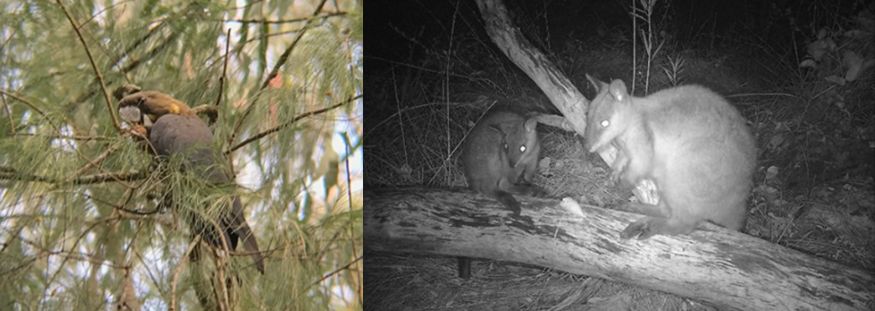
- Glossy black-cockatoo (Calyptorhynchus lathami) (SE).
- Eastern bristlebird (northern) (Dasyornis brachypterus).
- Southern greater glider (Petauroides volans).
- Yellow-bellied glider (southern subspecies) (Petaurus australis).
- Brush-tailed rock-wallaby (Petrogale penicillata).
- Platypus (Ornithorhynchus anatinus).
 Different fuel types and bushfire risk severity presented at a fire information session.
Surveys were conducted during 2023–24 by ecologists from BirdLife Australia, Wildlife Queensland, and the Glossy Black Conservancy. Survey methods included diurnal and nocturnal surveys, acoustic monitoring, camera trapping, and eDNA sampling. Results were shared at a joint workshop with Healthy Land & Water, survey partners, and Githabul representatives, where we collectively developed key fire management recommendations.
Fire management strategies that support species recovery
To support the recovery of these species, the fire management strategy recommends maintaining a mosaic of habitat age classes and prioritising the following actions:
- Protect unburnt foraging habitat and mature feed trees for glossy black-cockatoos from high-intensity fire for 5–10 years.
- Retain and protect both living and dead large trees from high-intensity burns and harvesting.
- Reduce Acacia regrowth, remove cattle, and reintroduce regular fire to eastern bristlebird habitat.
- Exclude high-intensity fire from riparian corridors.
Read more about what we’re doing in the Black Summer Bushfire Recovery Program.

This project is supported by Healthy Land & Water, through funding from the Australian Government’s Black Summer Bushfire Recovery Grants Program.


