

Recording flood impacts helps landholders plan for the long haul
As extreme wet seasons become more frequent, the damage caused by floodwaters is becoming a familiar reality for land managers across South East Queensland. Whether the damage is large or small, documenting the impact to the land after a high-flow event is crucial.
Understanding how water moves across the landscape, along with any new and existing damage to land and infrastructure, helps landholders plan their next moves. Ultimately, the goal is to better protect important infrastructure, maintain paddock productivity, and protect local waterways from contamination.
Since 2019, we’ve joined forces with dedicated landholders upstream of water treatment plants through the Seqwater-funded Multi Catchments Source Water Protection program to enhance our source water catchments. Our joint efforts to protect our drinking water sources include helping landholders implement regenerative farming practices and restore waterways through erosion repair, revegetation and weed management.
All this starts with building, updating, and implementing personalised property management plans with each landholder to improve their land and the raw water sources it borders.
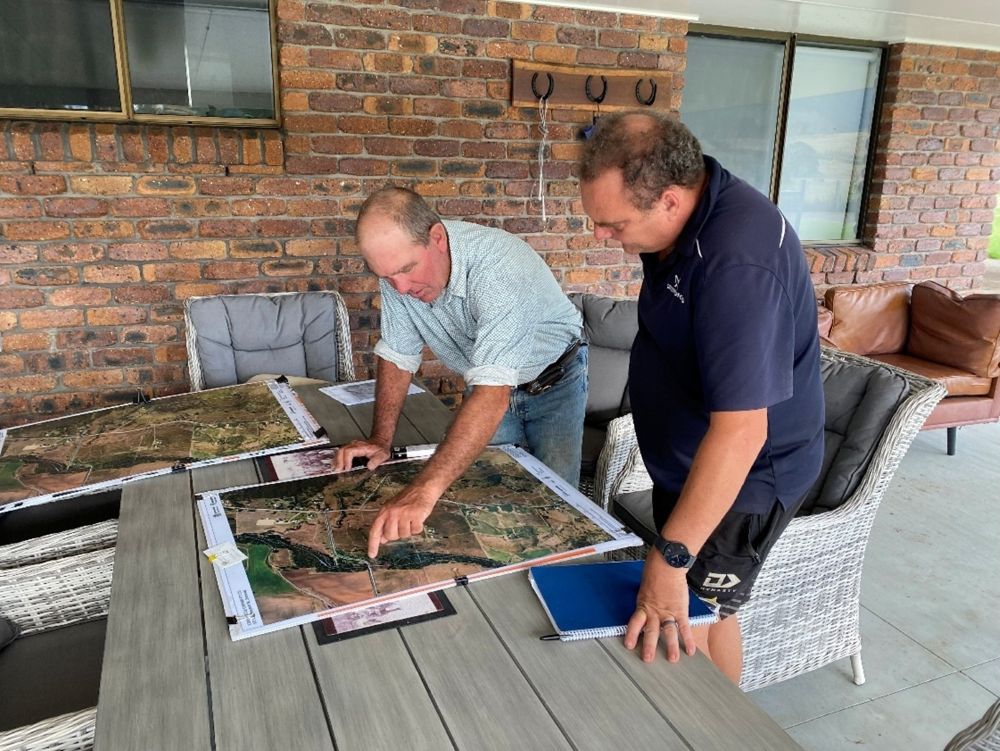 Landholders identify and record areas of significance, risks, and important infrastructure on their property map.
What makes a good property management plan?
A property management plan is a practical, personalised document that helps landholders understand risks on their land, set clear management goals, and balance priorities in a way that supports both business success and waterway health. Keeping these elements up to date makes a good property management plan actionable.
1. Mapping the present and future: describing the property and setting management goals
Every good property management plan begins with a clear map of the whole property. This includes mapping out key features such as key infrastructure, waterways, pasture conditions, and local laws. Regularly updating this information, especially after major weather events, helps landholders track any changes waterflow has made on their property and make informed management decisions to address new or increased risks that change poses.
Alongside this, setting and revisiting management goals is essential. Whether the focus is on improving pasture health, reducing erosion, or boosting productivity, having adaptable goals ensures the plan remains relevant and responsive to changing conditions.
2. The wins and the learnings: assessing risks and management strategies
For landholders, especially those with properties near waterways, it's important to keep an eye on both financial and environmental risks. Floods, fires, erosion, and infrastructure damage can quickly shift the outlook for productivity and the health of the land. A good property management plan helps spot these risks early and lays out practical steps, like improving drainage or reinforcing vulnerable areas, to reduce subsequent impacts and build resilience.
Once those risks are understood, landholders can put targeted strategies in place to meet their management goals. With the right advice, many of these strategies can do double duty. For example, managing livestock access to waterways not only protects water quality but can also boost stock productivity by reducing stress.
Common strategies include installing structures in high erosion risk areas, fencing off sensitive waterways, setting up off-stream watering points, and planting diverse native species into pastures and riverbanks.
Keeping track of what works (and what doesn’t) in the plan makes it easier to fine-tune things later, and it’s a great way to share ideas with neighbours facing similar challenges.
3. Who’s who: Clear roles, dynamic budgeting, and strong communication
Lastly, a good plan documents clear roles and responsibilities for maintenance, repairs, budgeting, and communication channels with the who’s who in the area, so nothing gets missed. Keeping an updated financial overview attached to the plan helps landholders keep track of new support and grants, manage income, and plan for routine upkeep of management strategies.
These amazing landholders in this partnership help protect the health of our waterways and our landscapes for neighbours down the road, the wider community, and our future generations.

Protecting raw drinking water sources is the first step to a robust multi-step approach to water treatment, all to deliver clean and safe drinking water to everyone’s taps at a stable cost. Recognising this, Seqwater and Healthy Land & Water collaborates with communities of passionate landholders, and various landcare and catchment groups to deliver a host of source protection programs across South East Queensland.
The Multi Catchments Source Water Protection program helps to ensure Seqwater’s water treatment plants can efficiently turn raw water into clean, safe, treated drinking water for the growing South East Queensland community. This program continues to support landholdings immediately upstream from Seqwater water treatment plants, in Rathdowney (Logan River), Canungra, Tamrookum, Morwincha, Beaudesert, Linville, Cedar Grove.
The Multi Catchments Source Water Protection program is delivered in partnership with Seqwater. Read more about the project.


