
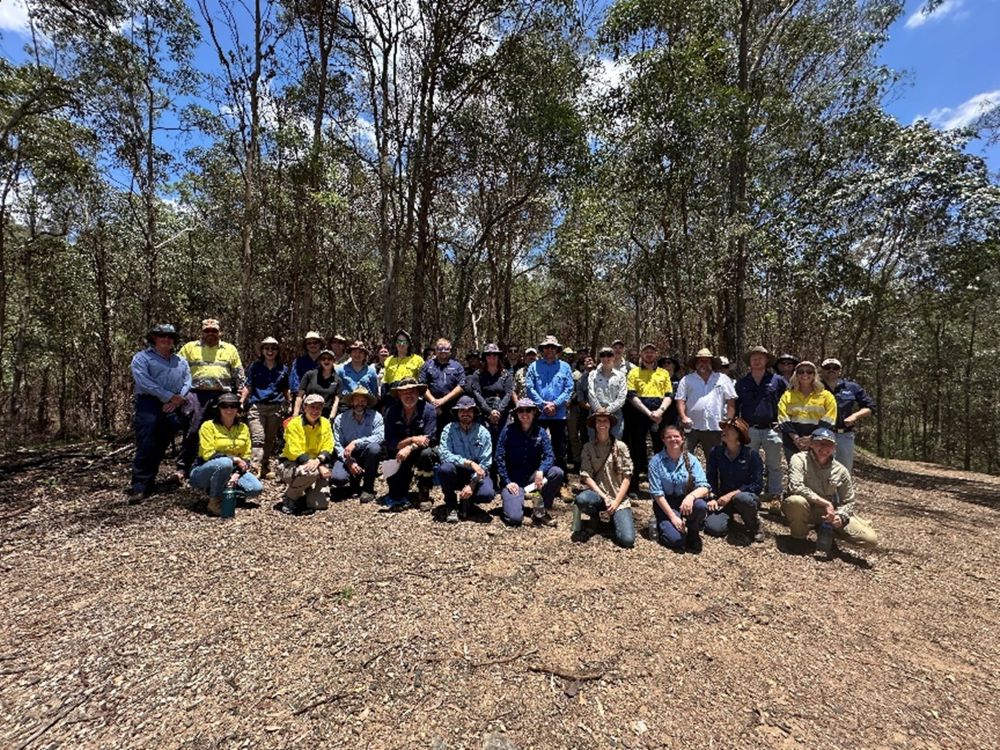
Sharing knowledge, building community: Inside the QFBC Samford forum
The newest member of the Fire Ecology & Preparedness team, Nick Cavendish, recently attended the Queensland Fire & Biodiversity Consortium (QFBC) Member Forum in Samford and shares his take on the community-focused day.
My introduction into the QFBC community began at the 19 November QFBC Member Forum held at Samford Community Hub, on the country of the Yugara, Jinibara and Kabi Kabi peoples. Inside the forum, conversations flowed easily across organisations and experience levels. Attendees, including professional fire practitioners, council representatives and agency staff from across the SEQ region, openly discussed learnings and engaged with practical field presentations. From the moment I arrived on site to set up, the forum set an open, welcoming tone. A complimentary coffee van greeted attendees, a small gesture, but one that immediately made people feel valued and looked after.
The forum struck a balance between structured information sessions and informal networking between agencies. As a first-time attendee, I appreciated the time built in for everyone to connect and meet new colleagues, building a strong basis for discussions later in the day.
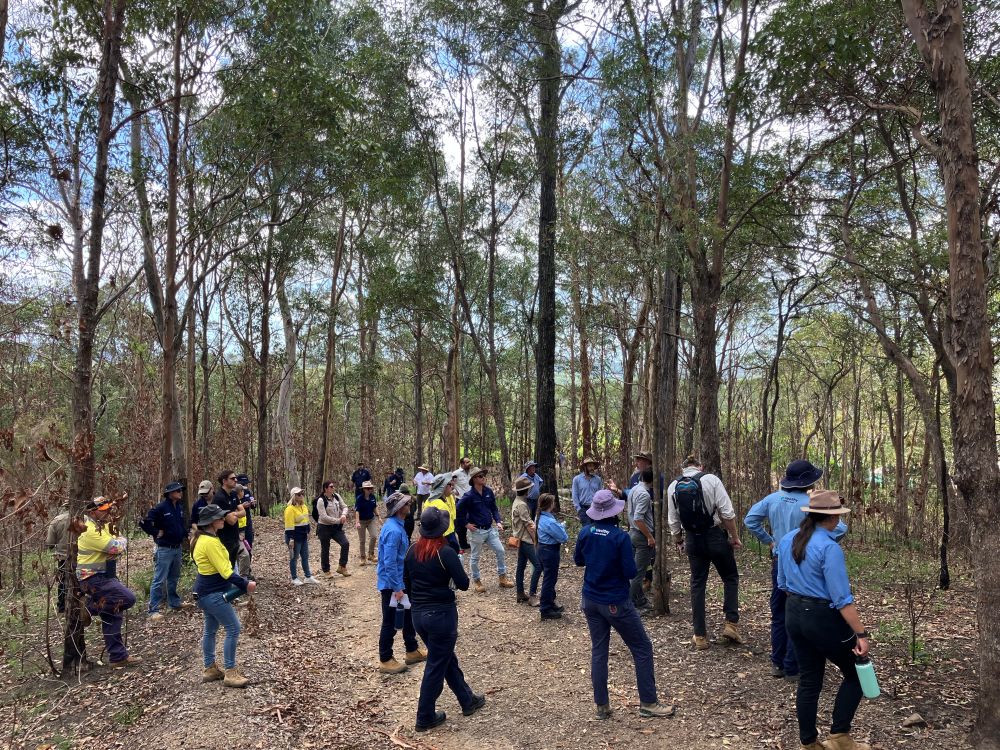
Site visit
One of my highlights of the day was visiting a recently planned burn site in Brian Burke Reserve. The split field presentations allowed for smaller groups to engage directly with presenters, pose thoughtful questions, and spark productive discussions around management actions. The selected burn site offered practical examples from a specific burn program, illustrating common challenges faced by QFBC member organisations.
As we walked through the site, the presenter explained the context of clear outcomes, including visible native understorey recruitment, weed eradication, and a decrease in fuel load close to residential developments.
The second talk focused on the native fauna of the area and the importance of local burn programs for wildlife in the Moreton Bay region, particularly large mammals such as koalas and greater gliders. Walking between these two presentations created space for organic conversations, with attendees often exchanging insights and experiences as they moved between sites.
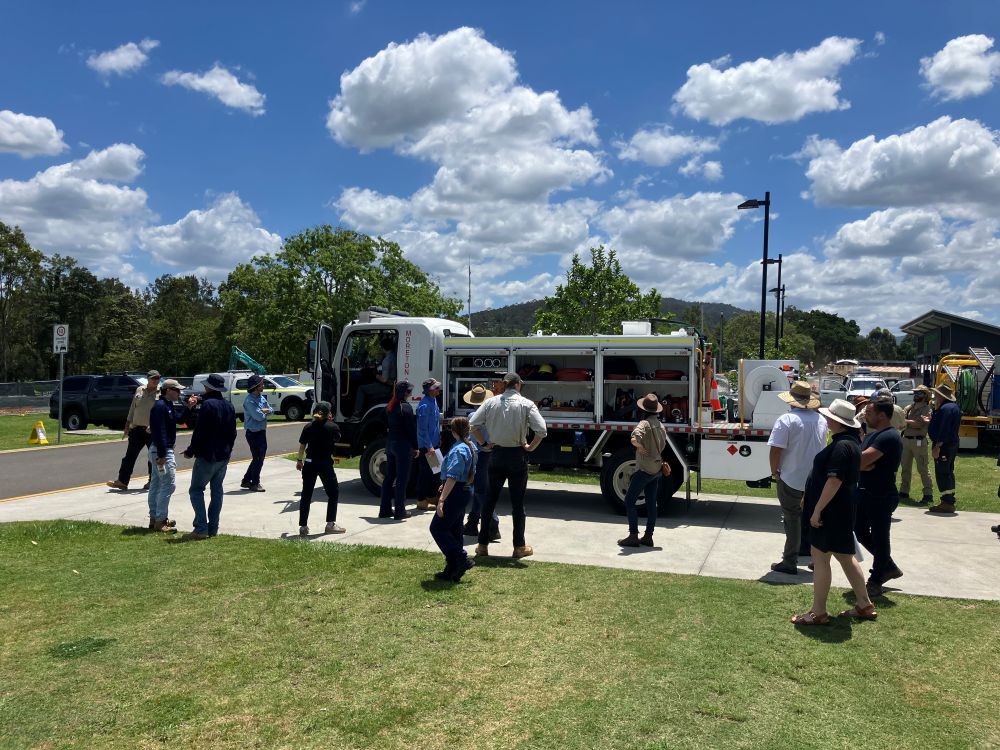
Practical demonstrations
Back at the community hub, practical demonstrations included drone flight demonstrations from Public Safety Training and Response Group, Water Tank Rescue and the City of Moreton Bay fire team showcased their heavy attack appliance. The linking of the on-site presentations with an immediate follow-up of tangible tool demos for improving fire management efficiency reinforced the learning and kept attendees’ engagement.
Information sessions and networking
As the day warmed up, the afternoon sit-down session provided a welcome opportunity to absorb more detailed content in a comfortable setting.
Speaking with some of the newer forum members throughout the day, I heard consistent feedback about how valuable it was to learn about other councils’ approaches, challenges, and shared experiences. Having a community that welcomes all questions, encourages peer learning, and fosters industry-wide connection is especially important for those new to the forum or working in smaller teams.
Overall, the forum successfully brought together people, innovative practices, and the broader context of fire management in the greater SEQ region. By combining practical field presentation, open discussion, and opportunities to connect across multiple organisations, the day reinforced the value of coming together as a fire management community. Thank you to every member of the QFBC for sharing knowledge, strengthening relationships and collectively improving how we plan for and manage fire across the landscape.


