
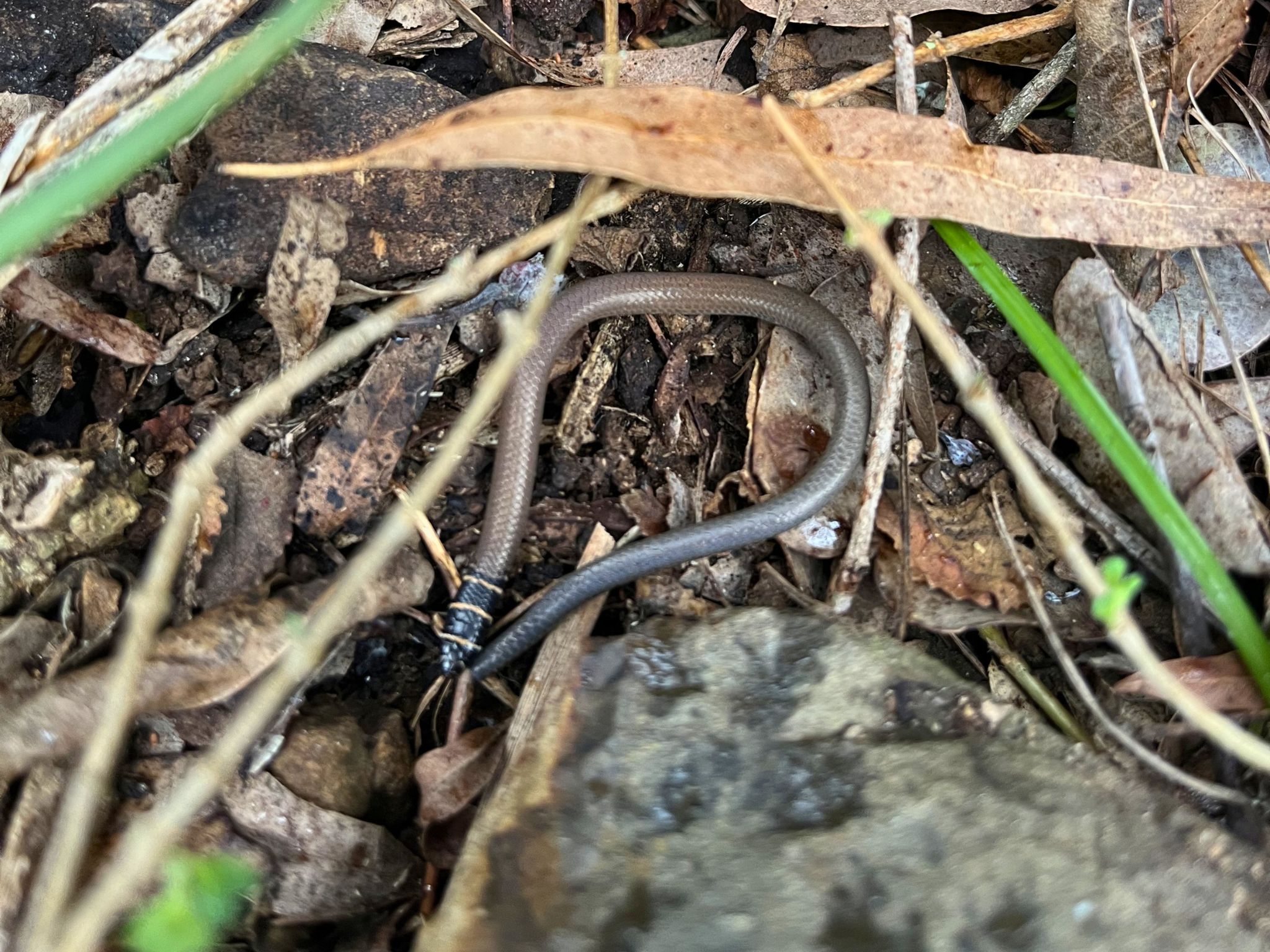
Protecting the collared delma in South East Queensland
Improving understanding of fire and habitat management impacts to support the long-term conservation of the vulnerable collared delma.
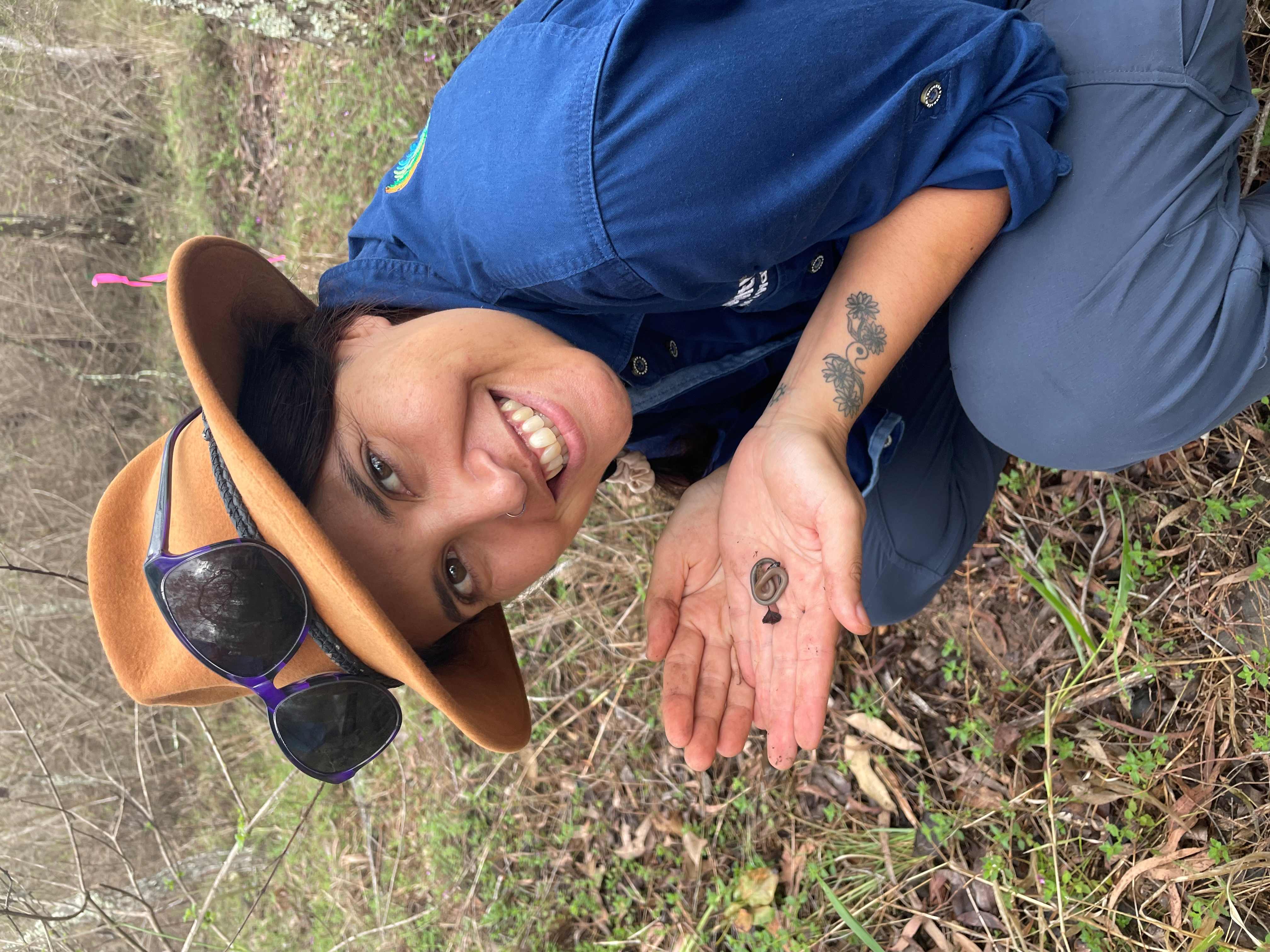 Principal Project Manager, Dr Diana Virkki with the Vulnerable collared delma (Delma torquata).
The collared delma (Delma torquata) is one of Australia's smallest legless lizards and is listed as Vulnerable under the EPBC Act 1999.
Found primarily in scattered populations across South East Queensland, the species relies on rocky grassy woodland habitats that are increasingly threatened by urban development, invasive weeds and altered fire regimes.
Healthy Land & Water is partnering with Brisbane City Council to investigate how planned burning and habitat management influence collared delma populations within Anstead Bushland Reserve. The project will provide evidence-based recommendations to support future conservation and fire management decisions for this unique species.
What we are doing
Monitoring collared delma populations
Undertaking scientifically robust surveys before and after planned burns to better understand how collared delma populations respond to fire management activities.
Investigating habitat condition
Assessing habitat characteristics including native ground cover, rocky shelter sites, woody debris and vegetation structure to identify the conditions that support collared delma populations.
Evaluating fire management outcomes
Comparing collared delma abundance across burnt and unburnt areas to understand how planned burning influences habitat suitability and species persistence.
Supporting evidence-based land management
Providing ecological advice and recommendations to help guide future fire and habitat management decisions within Anstead Bushland Reserve.
Building knowledge for species conservation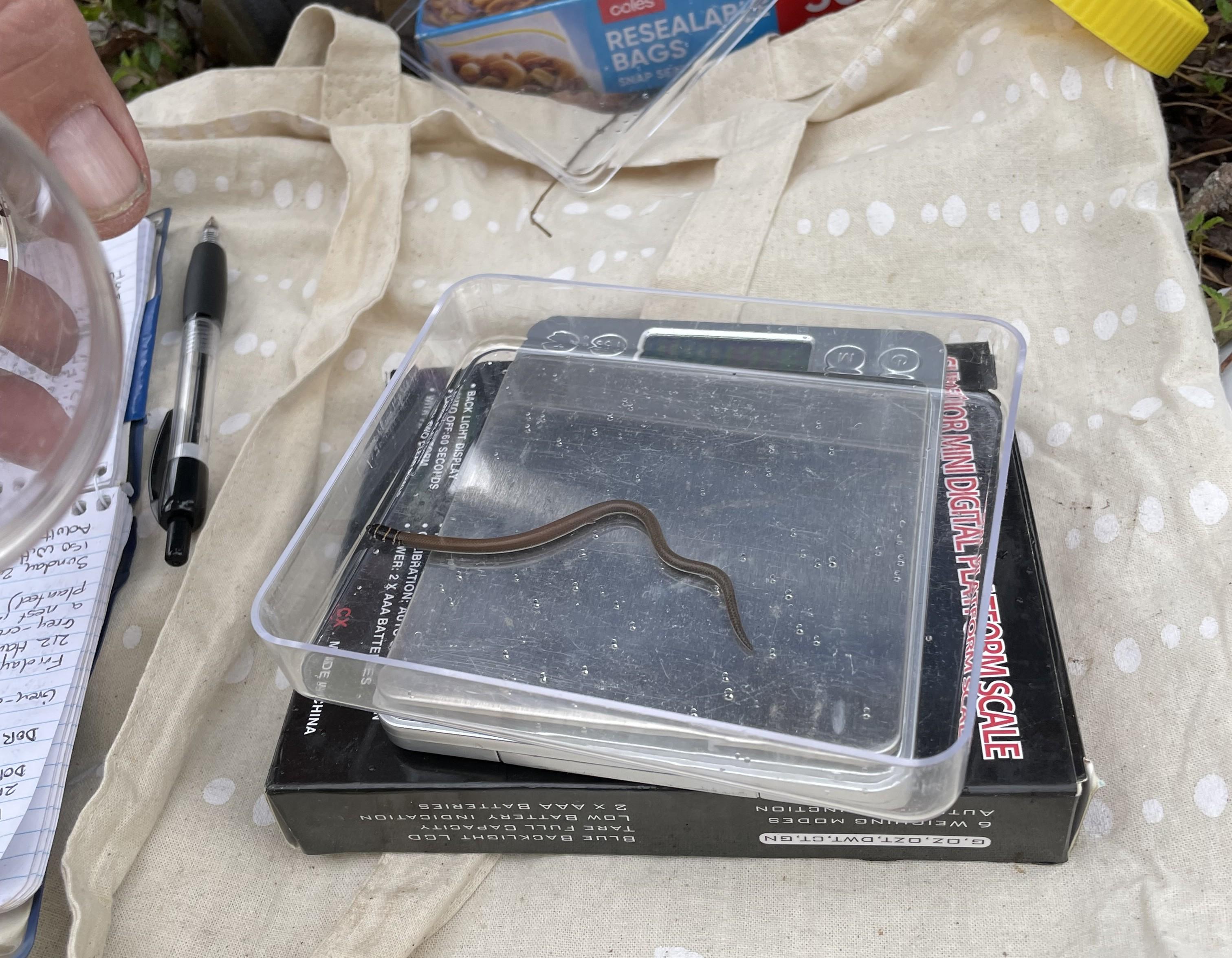 Capturing data and conducting surveys of collared delma habitats.
Generating baseline data and spatial information to support the long-term conservation and management of the vulnerable collared delma across South East Queensland.
Measuring success
- Completion of pre- and post-burn collared delma surveys across monitoring sites within Anstead Bushland Reserve.
- Collection of habitat condition data to better understand factors influencing collared delma abundance.
- Development of a spatial dataset documenting collared delma observations
- Delivery of evidence-based recommendations to support future fire and habitat management.
- Improved knowledge of how planned burning and habitat restoration activities influence collared delma populations.
Why this project is important
|
The collared delma is one of Australia's smallest legless lizards and is listed as Vulnerable under national environmental legislation. The species has a restricted distribution across Queensland and relies on rocky grassy woodland habitats that are increasingly threatened by urban development, invasive weeds and habitat degradation. While planned burning is an important tool for maintaining healthy woodland ecosystems, limited information exists about how fire affects collared delma populations. Building this knowledge will help land managers make informed decisions that support both biodiversity conservation and bushland resilience. By improving understanding of the species' habitat requirements and response to management actions, the project will contribute to the long-term conservation of collared delma populations in South East Queensland. |
Project snapshot
| Project name: | Fire Management for the collared delma |
| Project manager: | Dr Miranda Rew-Duffy, Healthy Land & Water |
| Project team: | Dr Diana Virkki, Healthy Land & Water |
| Partnerships: |
Brisbane City Council, delivered in collaboration with University of Southern Queensland, Dogwood Ecology, Queensland Government Department of Environment, Tourism, Science and Innovation (DETSI), Powerlink. |
This project builds on research conducted as part of the “Improving the Trajectory of Collared Delma in South-East Queensland” project, which received grant funding from the Australian Government Saving Native Species Program and is a partnership between Lockyer Uplands Catchments Inc., Pullen Pullen Catchments Group and Kholo Creek Catchment Group.

Level 11, 240 Queen St, GPO Box 735
Meanjin (Brisbane) QLD 4001, Australia
Monday - Friday 8.30am - 5.00pm
Healthy Land & Water Ltd ABN 91 115 662 989
About Us
What's on
Our Impact
Contact us
Phone: (07) 3177 9100
Email: info@hlw.org.au
We acknowledge that the place we now live has been nurtured by the Traditional Custodians of this Country for tens of thousands of years, and that their physical, cultural and spiritual custodianship of our land, water and skies is ongoing.

