

Sustainable Agriculture workshops Q4 wrap-up
Wrapping up a great quarter of Sustainable Agriculture events, here's what our team was up to across the region in October to December, attending events and visiting landholders.
Sensible Supplementation – 28 and 29 October
Although our Sensible Supplementation workshops were rescheduled, producers came out in record numbers. The workshops held in Boonah and Esk, which were held in conjunction with the Queensland Government Department of Primary Industries (DPI), FutureBeef team Kate Brown, and Greg Bath, alongside Mick Sullivan, gave Producers an in-depth guide into what supplements are available on the market and how to use them economically and efficiently to get the best outcome. This was followed up by a crash course in pasture ID presented by Vanessa and Bruce, giving landholders an insight into how to identify key pasture species and what they can tell you about your land condition and pasture productivity.
For those who missed the workshop or those interested in understanding more about livestock supplementation, pasture management, or cattle nutrition, check out the FutureBeef Dry Season Management of a Beef Business booklet, the How to Cost Supplements Guide and the How to Read Supplements Labels page.
Dry Season management
How to cost supplements
How to read Supplement labels
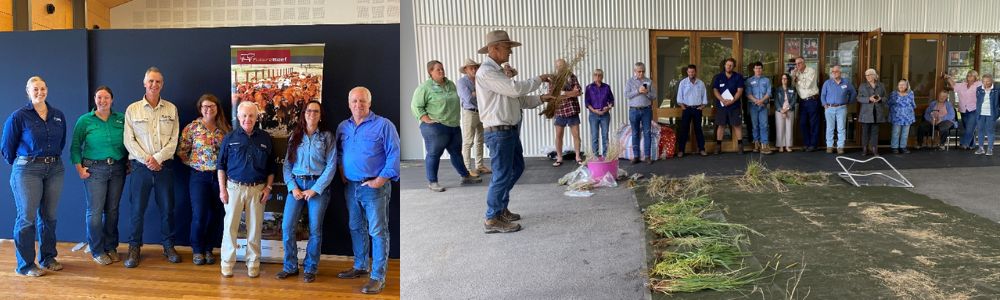 Image 1: The delivery team, Image 2: Bruce and Vanessa’s grass talk
The Boonah workshop was funded through the SQNNSW Innovation Hub, which received funding from the Australian Government’s Future Drought Fund, and the Esk workshop was funded by the Australian Government through funding from the Climate-Smart Agriculture Program under the Natural Heritage Trust.
Sown Pasture Renovation and Pasture Dieback: Building pasture resilience – 9, 10 and 11 October
In October, we teamed up with the DPI Pastures team, Ted Callanan and Vanessa MacDonald to deliver a series of workshops about Pasture Dieback and building pasture resilience.
The Boonah and Yarraman workshops focused on pasture dieback. Ted presented on how to identify dieback causing mealy bugs and the signs and symptoms of dieback. At the Boonah workshop, we met in the field to assess an affected pasture and landholders. We were tasked with locating some mealy bugs based on the information Ted had provided earlier in the day. We also talked through how producers in the area were able to regenerate their affected pastures by grass and legume species selection and tailoring grazing to support pasture establishment. In Yarraman, we joined in the field for an agricultural drone demonstration by Aerial Application Australia to see how weeds such as lantana can be efficiently and effectively controlled in hilly country.
Our Toogoolawah workshop focused on improving pasture productivity and grazing resilience by incorporating sown grass and legume species. Landholders looking to increase pasture productivity were shown the latest research from the DPI team on legume and grass species and the best way to establish them. This day also included a field walk to see how a local producer is improving their weight gains, grazing system and land condition by incorporating multi-species and legumes, including leucaena and desmanthus into sown pasture plantings.
For more information on pasture dieback, refer to the FutureBeef website
For more information on sown pastures, contact us for a copy of the booklet Pasture Management for South East Queensland Catchments or check out these resources.
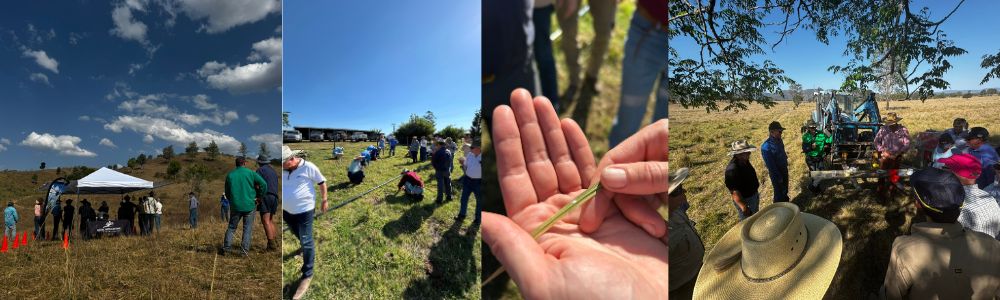 Image 1: Yarraman Field Visit, Image 2: In the field at Boonah, Image 3: Mealy Bugs talk
This event was delivered through the Queensland Pasture Resilience Program, which is a partnership between the Queensland Government Department of Primary Industries, Meat & Livestock Australia and the Australian Government through the MLA Donor Company and by Healthy Land & Water through the Queensland Government’s Natural Resources Recovery Program, the SQNNSW Innovation Hub received funding from the Australian Government’s Future Drought Fund and the Australian Government through funding from the Natural Heritage Trust under the Climate-Smart Agriculture Program.
Healthy Soils for the Bremer Catchment – 25 November
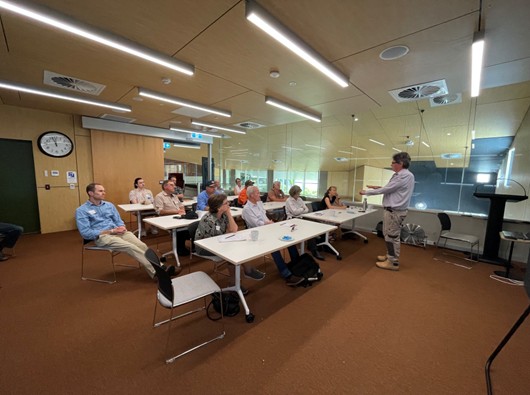
In November, we held a Healthy Soils workshop at Rosewood, focusing on farmers in and around the Bremer region. Presented by soil expert David Hall, producers got a look at all things soil biology and chemistry and how it applies to how crops are doing in the ground. This formed the first part of our Healthy Soils Program, where participating landholders will have access to on-farm soil sampling, soil test analysis and advice to help improve crops and pasture production and soil health.
This workshop is supported by the Australian Government through funding from the Natural Heritage Trust under the Climate-Smart Agriculture Program.


