
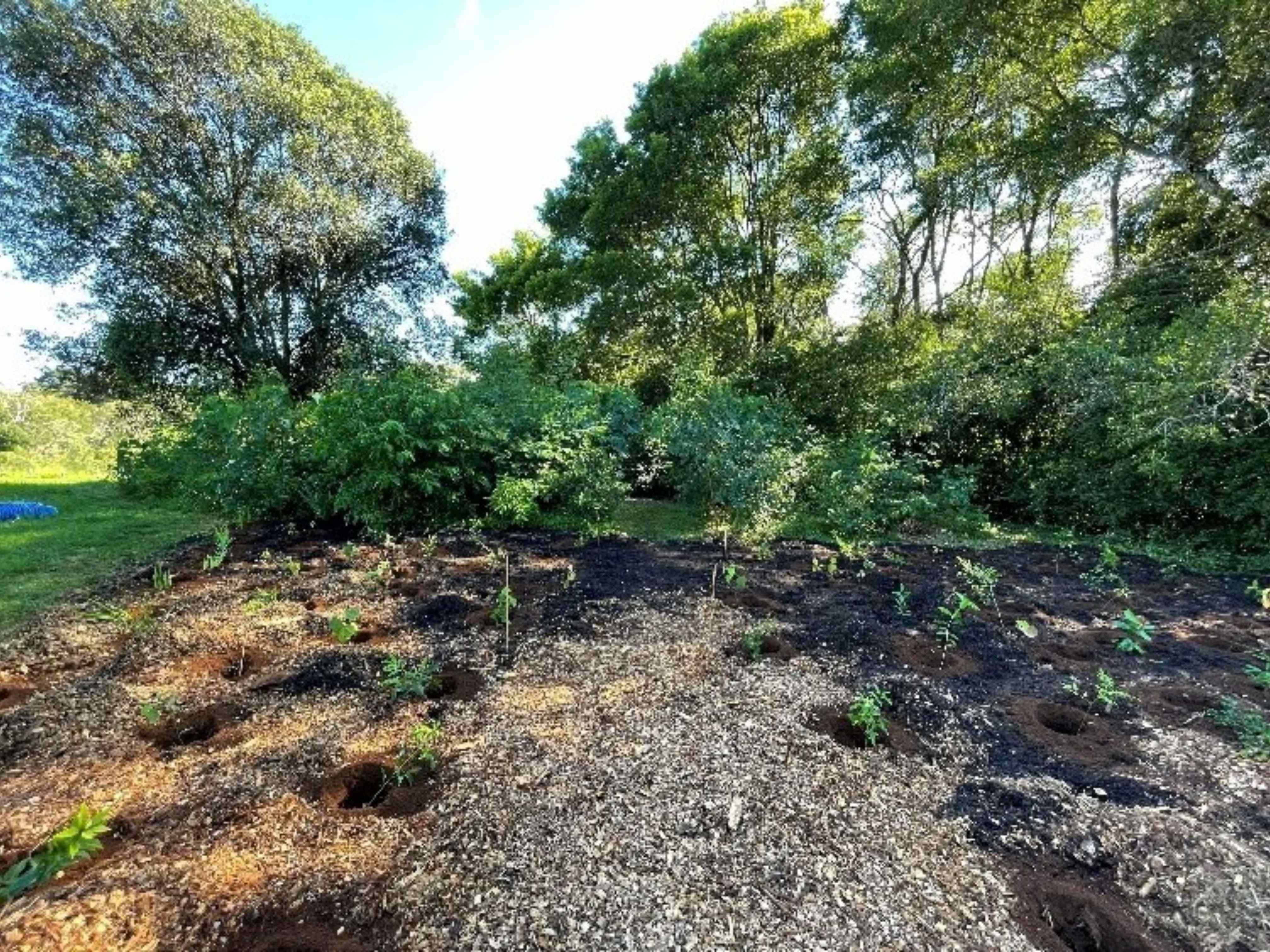
Restoring habitat for the Southern Pink Underwing Moth
A collaborative partnership between Healthy Land & Water, Watergum and Barung Landcare has brought about significant results in efforts to restore and enhance habitat for the critically endangered Southern Pink Underwing Moth.
The endangered Southern Pink Underwing Moth (Phyllodes imperialis smithersi) is a rainforest moth with vivid pink hindwings and elaborately patterned larvae. One of Australia's largest rainforest moths, adults can reach a wingspan of 13–17 cm, while caterpillars can grow to 10–12 cm in length. Its survival depends on undisturbed, shaded subtropical rainforest and a single species of host plant: the Carronia vine (Carronia multisepalea). This ecological relationship makes the moth sensitive to disturbance, and its presence is a reliable indicator of the overall health of our remaining critically endangered subtropical lowland rainforest.
Rainforest fragmentation due to agricultural activities and development across South East Queensland (SEQ) hinterlands, in addition to the reduced number of Carronia vines, mostly found in small, isolated pockets throughout SEQ and northern NSW, has contributed to the moth's decline. Even in some areas where Carronia vines persist, the fragments have become too isolated or weedy to be suitable moth habitat.
The project
Through coordinated on-ground efforts across the Gold Coast and Sunshine Coast hinterlands, the partnership worked to support the survival and reproduction of this species.
Our conservation efforts focused on three elements:
- Reestablishing and reconnecting their subtropical rainforest habitat.
- Supporting regeneration of genetically robust lineages of the Carronia vine.
- Controlling invasive weeds from known habitats to enhance degraded subtropical rainforests.
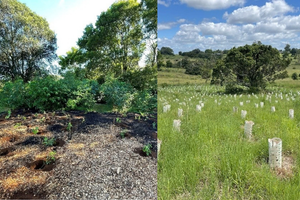 HLW and partners have assisted landholders in restoring vital habitat, reconnecting rainforest corridors and creating safe havens for biodiversity on their properties.
Targeted on-ground work
Through coordinated on-ground work, the partnership has achieved:
- 15 priority sites identified suitable for assisted regeneration (weeding) of existing habitat and/or revegetation to expand potential habitat within the Gold Coast Hinterland and Sunshine Council Hinterlands.
- 3 ha of rainforest revegetation to improve connection of habitat and expand potential habitat footprints, with over 12 ha of follow up maintenance undertaken.
- 15 ha of known Southern Pink Underwing Moth rainforest weeded (assisted regeneration), with over 27 ha of follow up works completed.
Monitoring
- Vegetation condition assessment surveys (VegCATs) were completed to measure the habitat condition before and after interventions were implemented.
- Key results showed improved condition of habitat thanks to the removal of weed species and subsequent recruitment of native species and improved canopy composition.
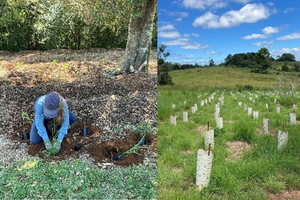 Habitat condition improved through weed removal, native species recruitment and a healthier canopy.
Community engagement
- Stakeholder sessions to understand historic efforts undertaken within SEQ and to align priorities and recovery actions for the Southern Pink Underwing Moth across the region.
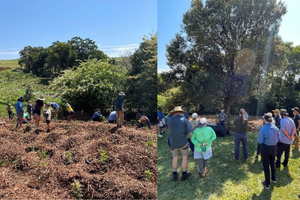
- Two community tree-planting events used the Miyawaki method, a dense native planting technique that can accelerate forest maturity to 10–20 years rather than 100, while improving biodiversity and local cooling. Together, these events helped secure 0.2 ha of future habitat for the moth.
- Two carronia vine identification and propagation workshops at Garima Estate with Watergum, Native Plants Queensland, N V Environmental, and Currumbin Wildlife Sanctuary. These workshops supported landholders and community members to identify the SPUM, its’ host vine, Carronia multisepalea and learn practical methods for propagating the vine.
Lessons learned
- Carronia vine seed collection: 2,500 seeds collected. While an early propagation batch has been affected and may not survive, important lessons around propagation protocols have been taken onboard and we are seeking to build more resilient future stock.
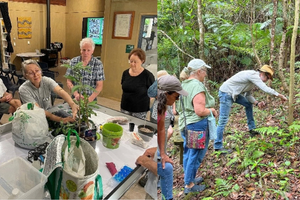 Collaboration across the region helped identify priorities and strengthen recovery planning for the moth.
What’s next
While the current project has now wrapped up, the work does not end here. Follow-up efforts are essential to protect the investment already made, understand what has worked, and build on the momentum created with landholders, partners and local communities.
- Seek future funding opportunities to continue securing, improving and reconnecting Southern Pink Underwing Moth habitat across SEQ.
- Support longer-term monitoring to measure improvements to habitat condition, Carronia vine establishment, and project outcomes over time.
- Work with partners and researchers to address key knowledge gaps for the moth, including habitat use, population response, propagation success and long-term recovery needs.
 Protecting the Southern Pink Underwing Moth is a long-term commitment. The next step is monitoring, research and continued action.


