
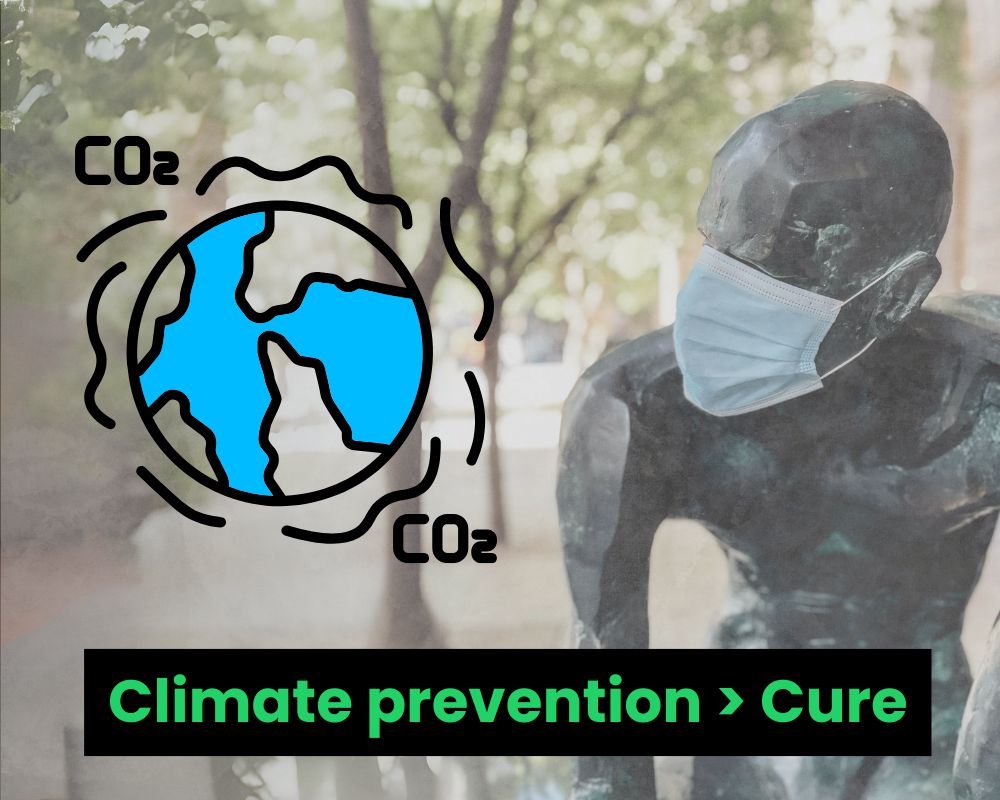
Climate action is critical to protecting public health, according to 112,000 doctors and medical experts.
Doctors say prevention is better than cure in health, and when it comes to climate change. The health care profession has become increasingly vocal about the links between climate change and health in recent years.
In a recent joint statement from medical colleges representing more than 112,000 doctors and medical experts, doctors declared climate change a major public health emergency. They believe delaying climate action will cost Australian lives, hike the cost of living, and waste taxpayer dollars in the long run.
Healthy Land & Water is encouraged by the medical community's call to action. Julie McLellan, Healthy Land & Water CEO says that research is increasingly showing that that reducing emissions is not just a matter of ecosystem health but is vital for human health as well.
Healthy Land & Water has been monitoring the health of South East Queensland’s waterways for 25 years. Over this time, a huge amount of work has been done which Julie says is why South East Queensland’s waterways are in as good a shape as they are, but she says much more investment is needed to arrest the decline in ecosystem health we are seeing on ground.
Their joint statement from doctors and medical experts says that without preparing our national public healthcare system for increased demand, Australians could suffer physically and financially from climate-related injuries, respiratory and cardiovascular illnesses, mental health issues and more.
Read the The Royal Australasian College of Physicians's media release:
Delaying climate action will cost lives, hip-pockets and the public purse: Doctors
Joint statement from medical colleges representing more than 112,000 doctors and medical experts.
Australians will find it even harder to get the medical care they need without strong climate action from the next government.
Heatwaves are driving up emergency presentations, ambulance call outs and hospitalisations, while bushfires, cyclones, floods and droughts are also increasing demand for both mental and physical health services.
As doctors, we know an emergency when we see one. Climate change is a public health emergency and a major threat to our nation’s health system.
All political parties must take this threat seriously. Failure to reduce emissions and climate-proof health services will lead the system to a breaking point.
Lifesaving work is currently underway as part of the National Health and Climate Strategy, which the Government developed in 2023 thanks, in part, to our advocacy.
Whichever party forms government after 3 May must continue to defend and strengthen our healthcare system by continuing to implement the National Health and Climate Strategy.
This includes taking strong action to reduce emissions across all sectors and working in partnership with First Nations organisations, including Aboriginal Community Controlled Health Services, to support First Nations leadership on climate change and health.
The major parties’ commitments thus far show they understand that healthcare, along with cost of living, is important to voters this election.
Without preparing our public healthcare system for increased demand, patients will be hit in the hip pocket by climate-related injuries, respiratory and cardiovascular illnesses, mental health issues and more.
Strengthening the health system now will also save public money in the long term. Prevention is better than cure in health, and also when it comes to climate change.
For many years we have urged successive governments to take strong action on emissions reduction. Any winding back of Australia’s current 2030 and 2050 targets will endanger lives in Australia and beyond.
We in the health sector are eager to do our bit too, given our sector contributes over 5 per cent of Australia’s total emissions.
The National Health and Climate Strategy lays the path for decarbonising the health sector, and we urge the next government to continue working with us to implement this crucial transformation.
Professor Jennifer Martin, Royal Australasian College of Physicians
“Climate change is a public health emergency which particularly impacts priority populations, including older people, children and First Nations people.
“The next government needs to continue climate-proofing our health system and take strong action on emissions reduction across all sectors.”
Dr Stephen Gourley, Australasian College for Emergency Medicine
“We need to accelerate our efforts to move into renewable energy and de-carbonise the provision of health care, especially by reducing unnecessary tests.”
Dr Rod Martin, Australian College of Rural and Remote Medicine
“There is substantial evidence that the impacts of climate change have created a global health emergency and that the effects are being felt especially by rural and remote communities in Australia.
“All levels of government in Australia need to take immediate and sustained action to reduce the impacts of climate change. This action must reflect the contexts and needs of rural, remote and First Nations communities.”


