
Boots on the ground: A day in the field, discovering what the Natural Resource Management Expansion Program is doing for threatened species and biodiversity
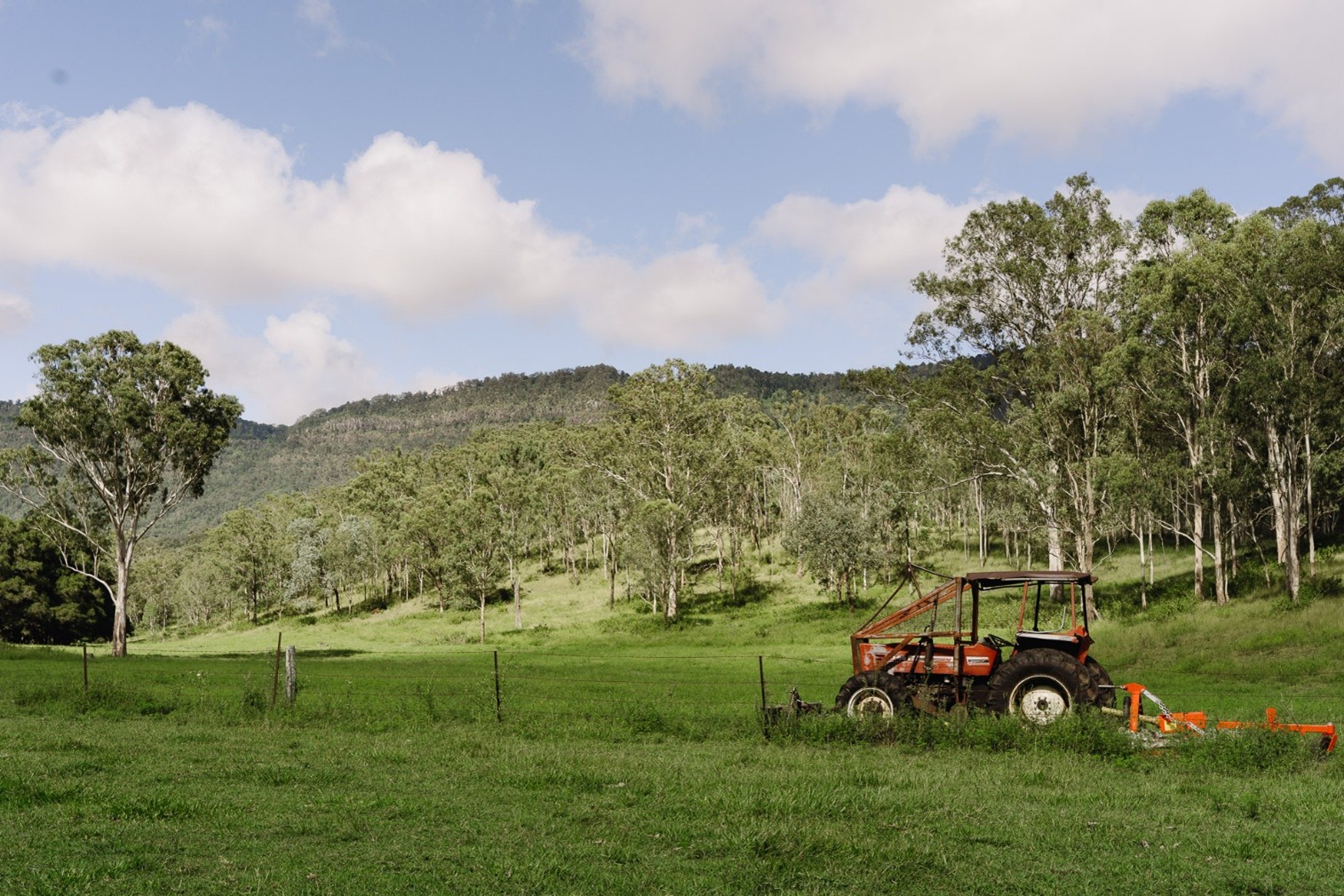
On 11 March, we headed out to a property near Laidley, 3,250 ha bordering Main Range National Park, to see the Threatened Species Resilience Program in action. Detection dogs, nest box installations, weed management, fire planning and a fifth-generation farming family who are very much part of the solution.
It's a Wednesday morning on a property near Laidley, and there's a dog sniffing through the grass, two people up a tree, and a group of landholders, scientists and government representatives watching it all unfold. This is what investment into Natural Resource Management looks like on the ground.
The Crosby property sits on the edge of Main Range National Park, 3,250 hectares of land, home to approximately 1,400 species of flora and fauna, some of them threatened. According to iNaturalist data shared by Kate Crosby, Glynn's daughter, visitors to the property have logged over 4,500 observations on the citizen science platform, documenting the remarkable diversity of species. The Crosbys also run a program with local schools, getting kids off their screens and into the bush to learn about biodiversity and the natural world.
On 11 March, Healthy Land & Water brought together its project and communications teams, the Crosbys, and government partners for a field day showcasing the Threatened Species Resilience Program, one of three programs the organisation is delivering under the wider Queensland Government’s Natural Resource Management Expansion Program (NRMEP).
NRMEP is a $117.84 million investment into land and soil, water and biodiversity, under which Healthy Land & Water’s three projects (Threatened Species Resilience, Living Landscapes & Resilience and Urban Rewilding across South East Queensland) represent a combined $12.25 million commitment.
The Healthy Land & Water communications team was on the ground all day, capturing the work as it happened. Here's what we saw.
Why this property matters
The Crosby property shares a boundary with Main Range National Park, which makes it more than just a private cattle station. It's a buffer zone, and what happens on this land directly affects what happens inside the park.
The forest here is still maturing due to the property’s historic timber harvesting, and while it's healthy and full of food for fauna species, the trees simply haven't had the time to develop the natural hollows that species like Greater Gliders and Glossy Black-Cockatoos depend on for nesting and shelter. That's exactly what the nest boxes are here to address.
"The property where we are today is adjacent to Main Range National Park, which serves as a safe haven for many threatened species. Management actions on these properties significantly influence biodiversity and conservation outcomes and, if prioritised, can achieve landscape-scale results."
- Leonard Ainsworth, Environmental Project Manager, Healthy Land & Water
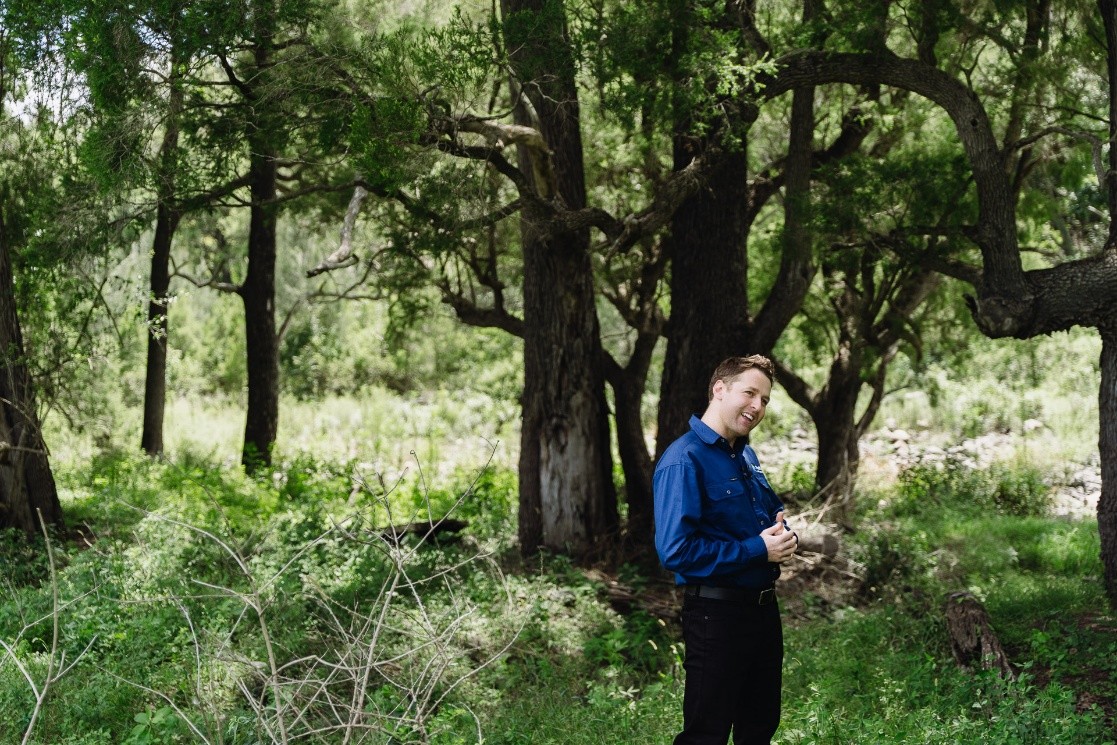 Photo: Healthy Land & Water’s Environmental Project Manager, Leonard Ainsworth. Credits: Joseph Bobadilla, Brown Fox Creative House.
Four species are the focus of this program: Koala, Glossy Black-Cockatoo, Brush-tailed Rock-wallaby, and Greater Glider. All are listed as vulnerable or endangered. All face the same broad set of challenges: habitat loss, invasive predators, altered fire regimes, and increasing climate pressure. The program is tackling each of these head-on.
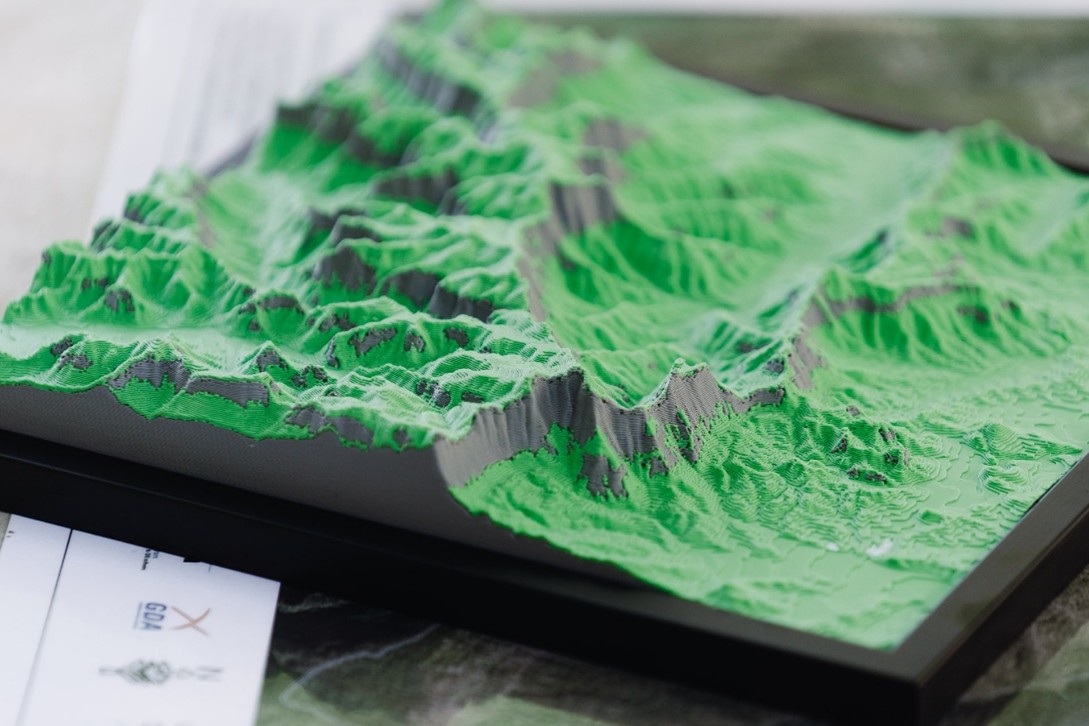 Photo: Model of the property showing the extent and features of the land. Credits: Joseph Bobadilla, Brown Fox Creative House.
NRMEP investment in action
In January 2026, Healthy Land & Water secured $12.25 million from the Queensland Government to deliver three major environmental projects across South East Queensland: Threatened Species Resilience, Living Landscapes & Resilience, and Urban Rewilding. Together they protect threatened species, restore waterways and landscapes, and strengthen biodiversity in urban and peri-urban areas.
The field day on the Crosby property was a window into what that investment looks like on the ground for the Threatened Species Resilience project, specifically, covering detection dogs, nest box installation, weed control, fire management plans, and the kind of long-term landholder relationships that make it all possible.
"Natural Resource Management investment is often talked about in environmental terms, but what it actually delivers is much broader. For landholders, this kind of funding provides access to expert support, tools, and on-ground works that improve soil health, water quality, and landscape resilience, outcomes that directly support productivity and reduce risk from things like erosion, flooding, and extreme weather."
- Julie McLellan, CEO, Healthy Land & Water
For Healthy Land & Water, this investment means being able to work at a scale that makes a real difference, connecting individual properties into a broader regional picture so that work done on properties such as the Crosbys' links up with efforts across South East Queensland.
"This funding isn't just about environmental outcomes. It's about future-proofing South East Queensland. It's an investment in resilience, in communities, and in ensuring the region can continue to thrive as it grows."
- Julie McLellan, CEO, Healthy Land & Water
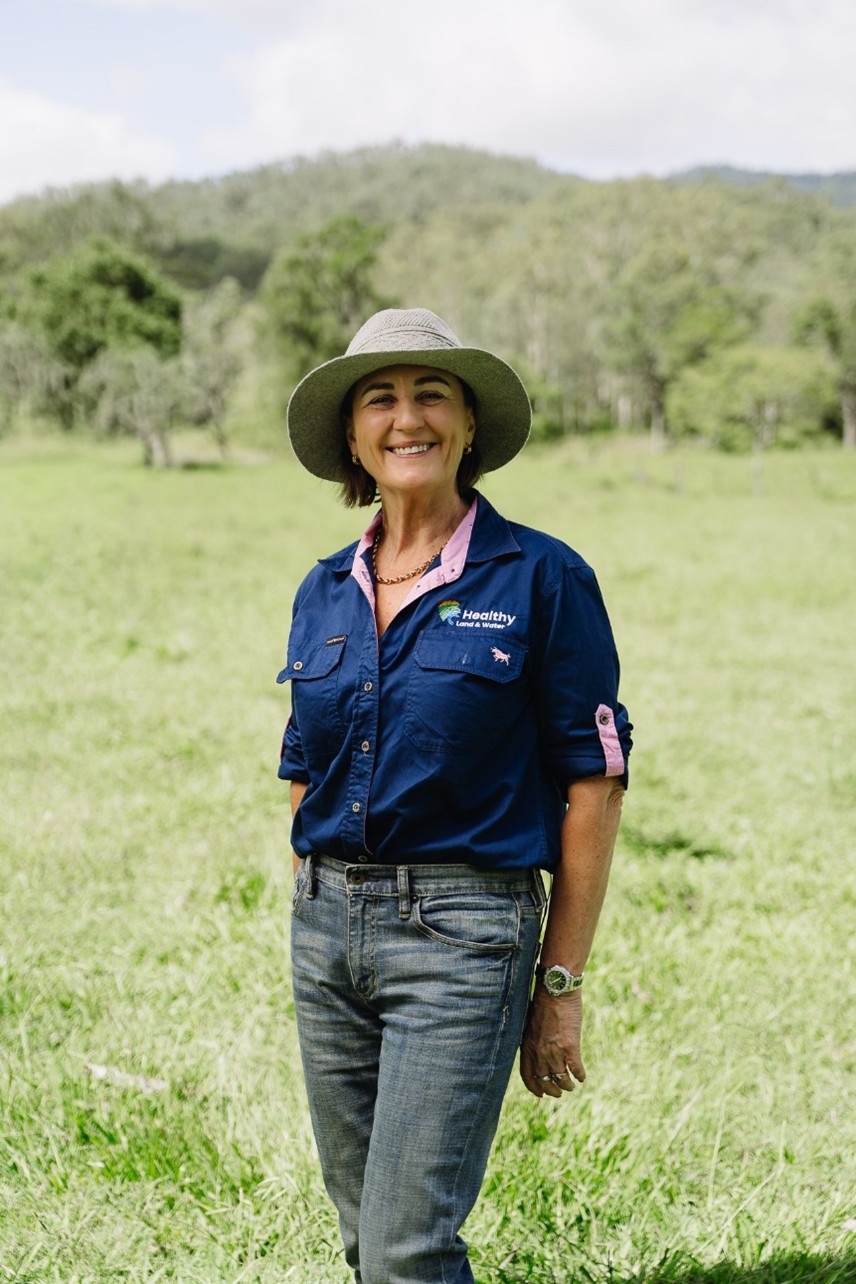 Healthy Land & Water’s CEO Julie McLellan interview. Credits: Joseph Bobadilla, Brown Fox Creative House
The dog that can smell what we can't see
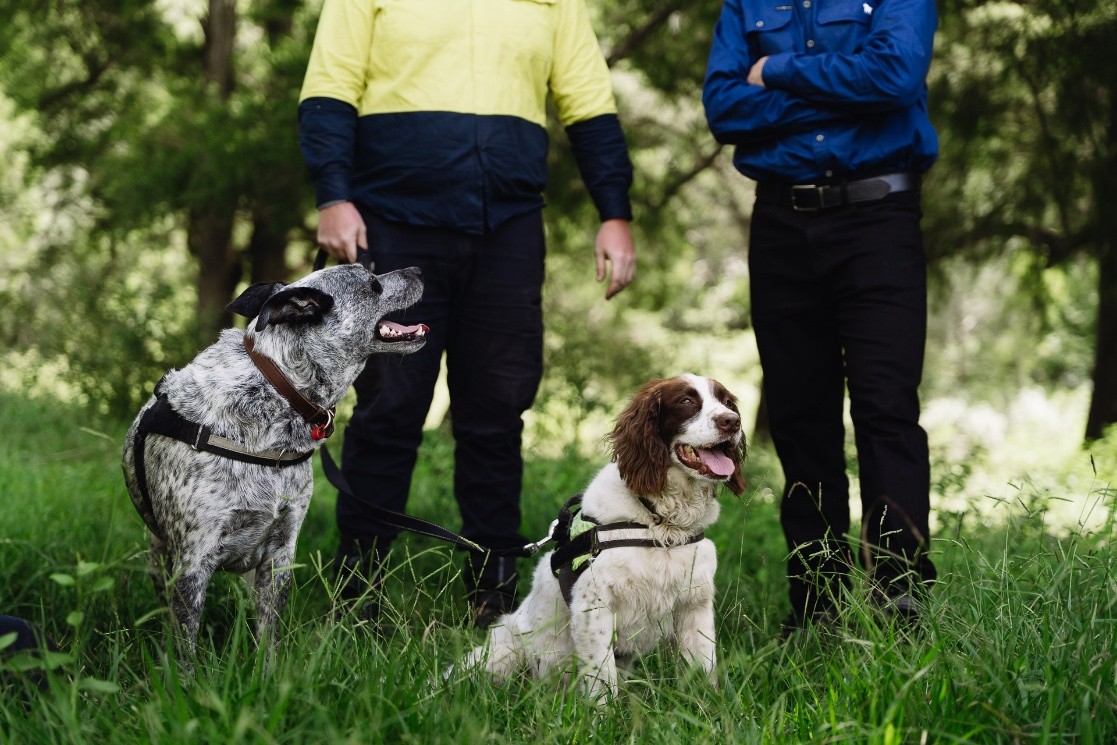 Photo: Detection dogs Arrow (left) and Danny (right). Credits: Joseph Bobadilla, Brown Fox Creative House.
Mid-morning, Dennis Gannaway, owner of Bellden Environmental Services, took to the field with two dogs, demonstrating the program's scent detection work right where the group had gathered. Danny, an English Springer Spaniel, is a highly experienced scent detection dog trained to find seven distinct scent targets, including invasive species, threatened species and potable water. Arrow, a mixed-breed Cattle Dog, is younger and still in training, watching and learning. His focus will be on invasive species such as the European fox.
Danny’s primary target on this property is to locate feral fox dens. Foxes are a serious threat to species like the Brush-tailed Rock-wallaby. Locating and mapping dens and movement paths of invasive predators across the farm is the first step in developing a comprehensive management plan to reduce the threat posed by feral predators. The dogs will target eluvial planes, where denning activity is most likely, before moving up onto the hill slopes to ensure a consistent and comprehensive search of the property is completed. Searches are complemented by the placement of a field camera to capture the movement of targets where dogs have indicated on scent alone.
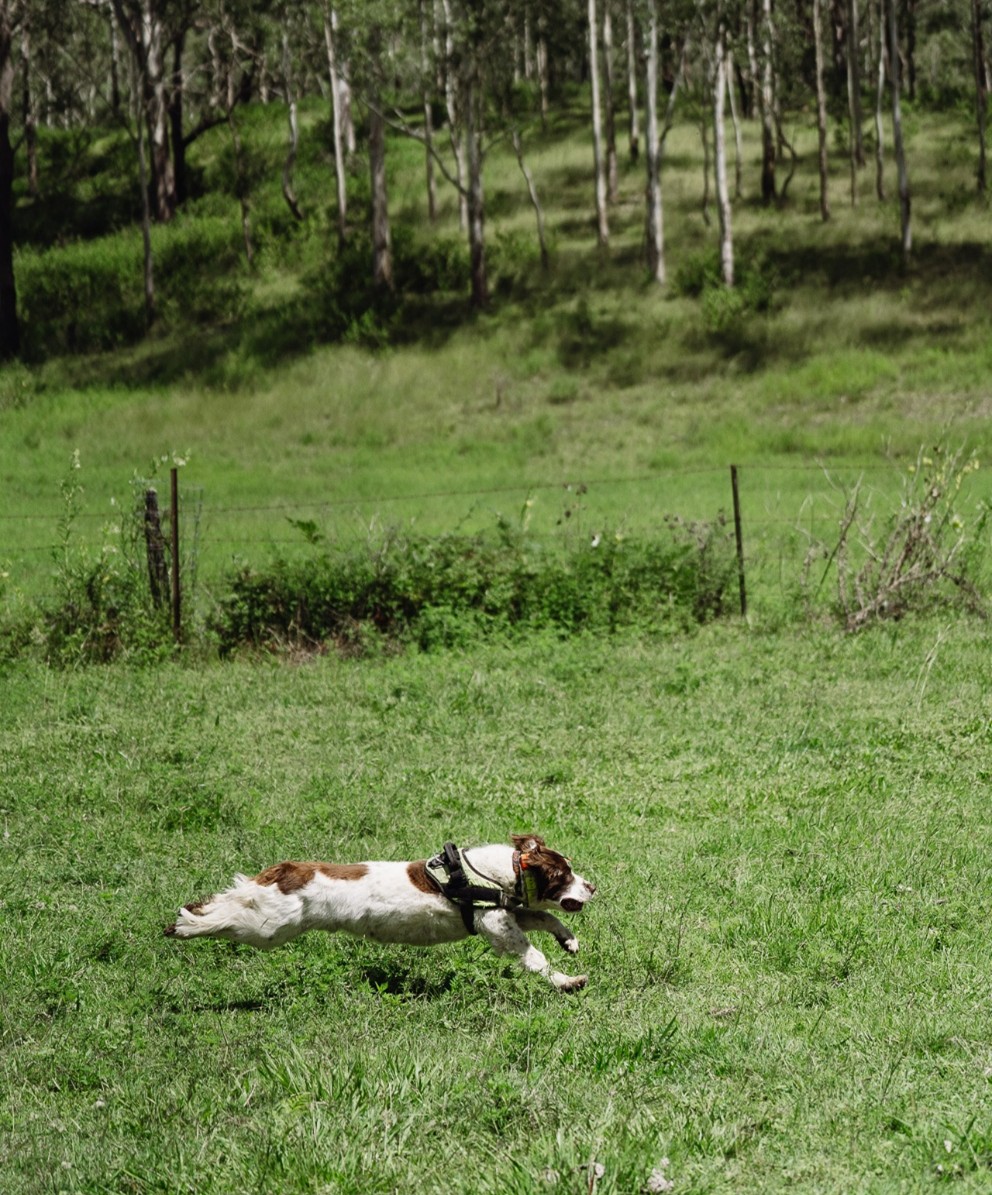 Photo: Detection dog Danny at work, scouting the field in search of fox dens. Credits: Joseph Bobadilla, Brown Fox Creative House.
Watching Danny in action makes it obvious why detection dogs are such a valuable tool. What would take a team of people days to cover, a trained dog can work through in a fraction of the time, with a level of precision that no camera trap or sensor can match. Dennis tracks Danny’s location via GPS, joins him at the find, and then rewards him with his favourite thing, a good game with a ball.
"A scent detection dog can cover ground and find things that cameras and traps simply can't. Their nose takes them straight to the source. No guessing, no setting up equipment and waiting. It's fast, it's precise, and it's why dogs are such an effective tool when you're monitoring animals, both native and introduced, in the field."
- Dennis Gannaway, scent detection dog handler
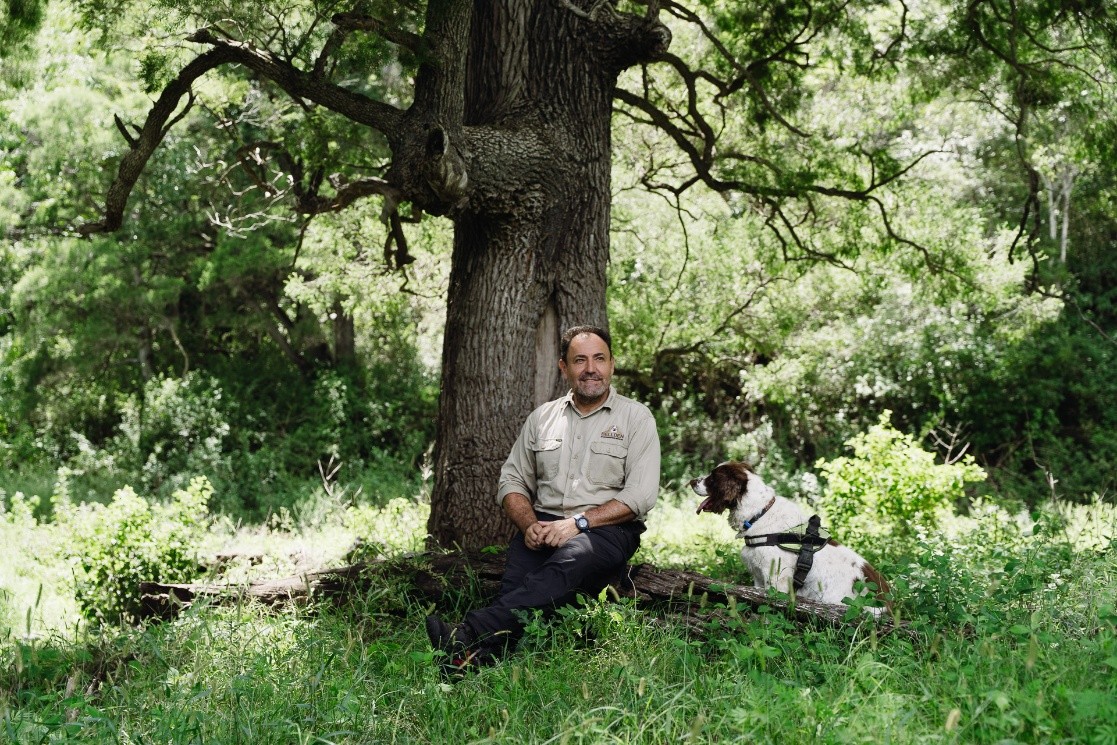 Photo: Dennis Gannaway with detection dog Danny. Credits: Joseph Bobadilla, Brown Fox Creative House.
Going up. Nest boxes for Greater Gliders and Glossy Black-Cockatoos
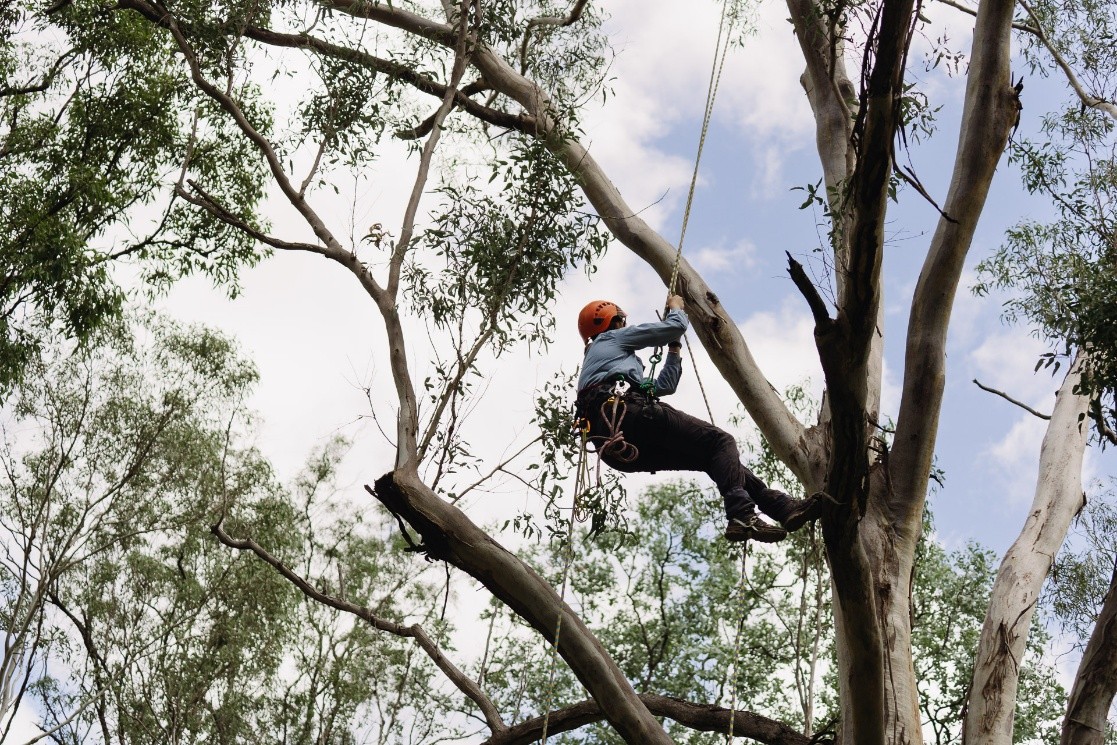 Photo: Healthy Land & Water’s Environmental Project Manager Indigo Kuss-Patterson climbing the tree. Credits: Joseph Bobadilla, Brown Fox Creative House.
The trees on the Crosby property are full of life, but they're missing one thing: hollows. That's where Indigo Kuss-Patterson and Margie Dickson come in.
Both are certified to work at height. On the day, one climbed while the other anchored at the base, managing the ropes and equipment and hauling the nest boxes up once the right spot was found.
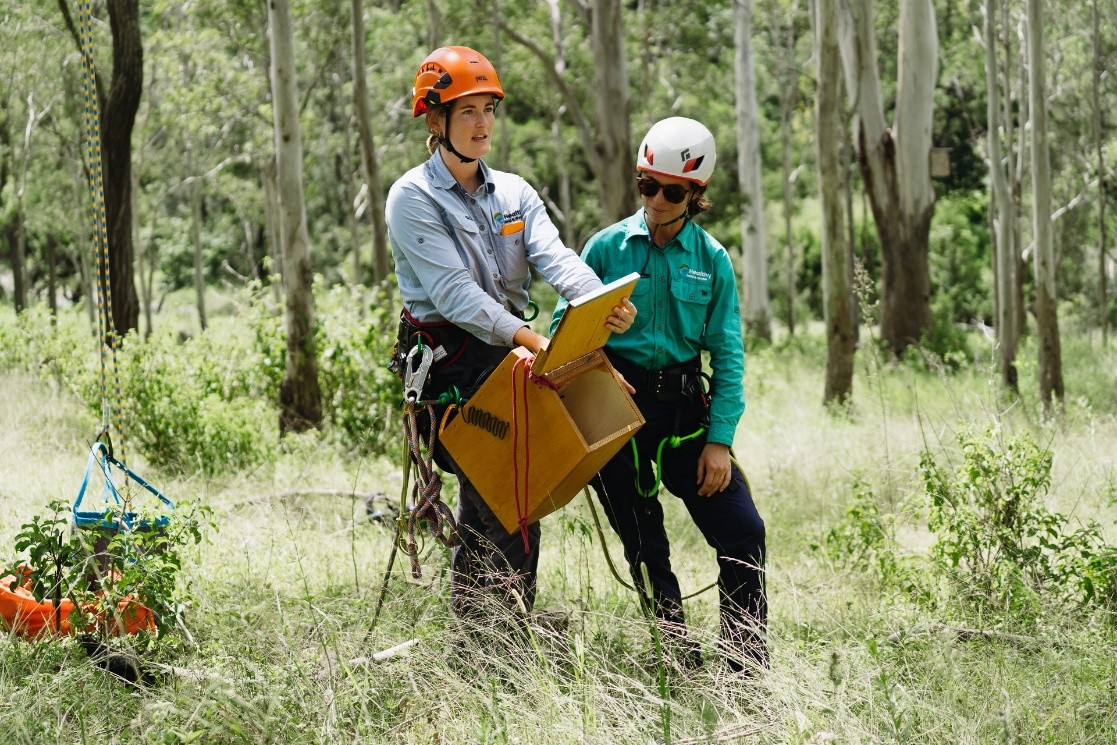 Photo: Environmental Project Manager Indigo Kuss-Patterson and Environmental Project Manager-Engineer Margie Dickson explaining how the boxes work. Credits: Joseph Bobadilla, Brown Fox Creative House.
The boxes go up with a two-metre slingshot to set the ropes, then it's a careful climb, a careful position, and a secure fix to the trunk. Each box comes pre-loaded with wood shavings to give future occupants a head start on nesting.
"Nest boxes are important for threatened species in areas where habitat for nesting is limited by clearing, fires, or competition from other species. Providing additional habitat in areas that align with where our threatened species are found increases the carrying capacity of the ecosystem, in a way that wouldn't be generated naturally for decades."
- Indigo Kuss-Patterson, Environmental Project Manager, Healthy Land & Water
Across the program, 10 nest boxes will go in for Greater Gliders and 5 for Glossy Black-Cockatoos. Once they're up, a telescopic camera will periodically peek into the box hole to check if anyone has moved in, without disturbing whatever might be inside.
"Once they're up, we'll be monitoring the boxes to see which species decide to call them home. We can do that without disturbing them. A telescopic camera can peek into the box hole and give us a picture of what's in there, without disrupting or disturbing its occupants."
- Margie Dickson, Environmental Project Manager-Engineer, Healthy Land & Water
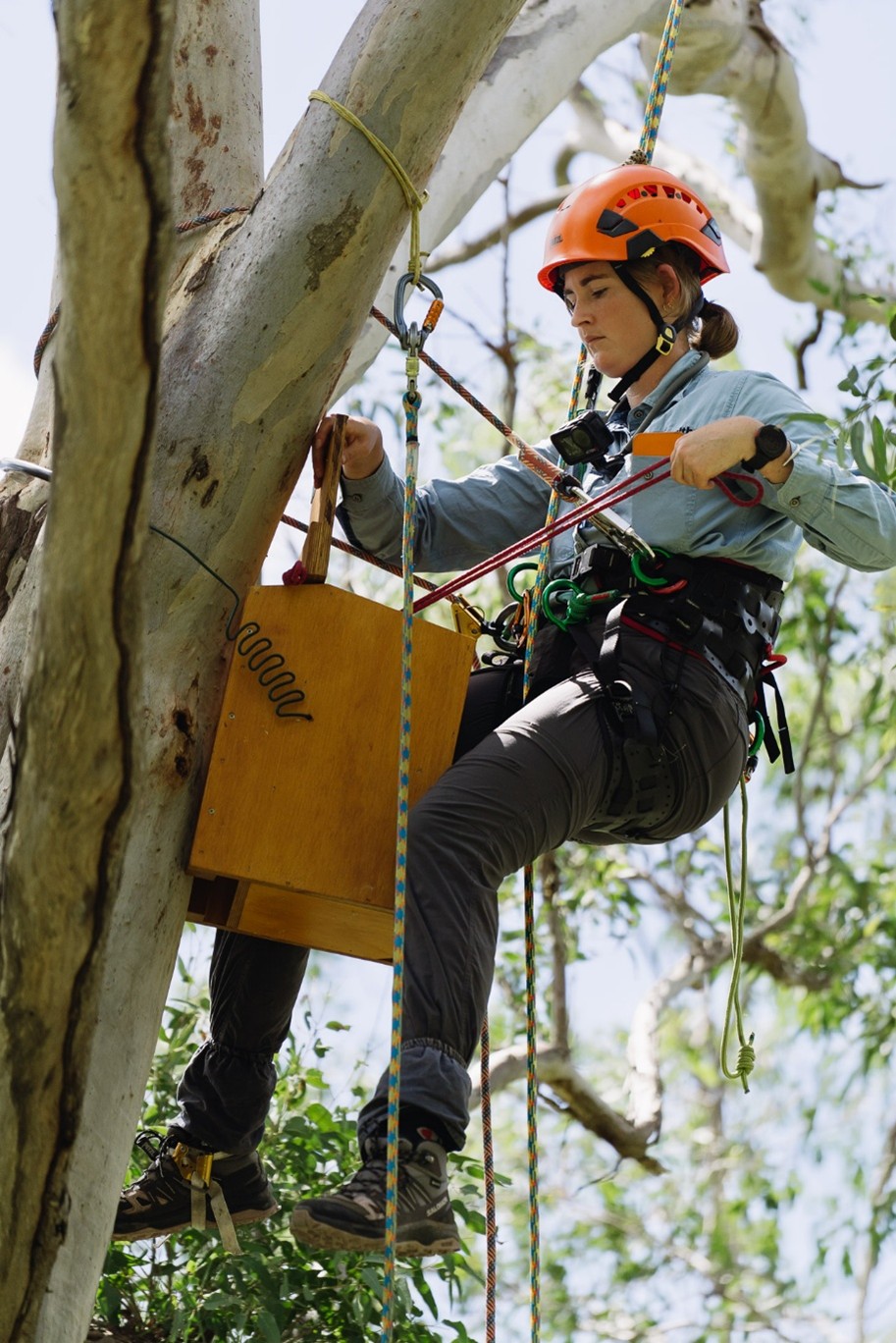 Photo: Environmental Project Manager Indigo Kuss-Patterson installing the nest box. Credits: Joseph Bobadilla, Brown Fox Creative House.
Weed management and fire: covering all the bases for biodiversity
The scent-detection demo and nest-box installation were the most visible parts of the day; however, the program goes well beyond them. Across 12 hectares of threatened species habitat, the team is removing invasive weeds that compete with native plants and choke the understorey that wildlife depends on to move through the landscape. It is careful, methodical work that takes time to show results, and it is precisely what allows native vegetation to recover and reconnect with the National Park next door.
Fire management is the other major piece. Getting fire right in this landscape is genuinely complicated: burn too little and fuel loads build up dangerously, burn at the wrong time and you risk the very species you're trying to protect.
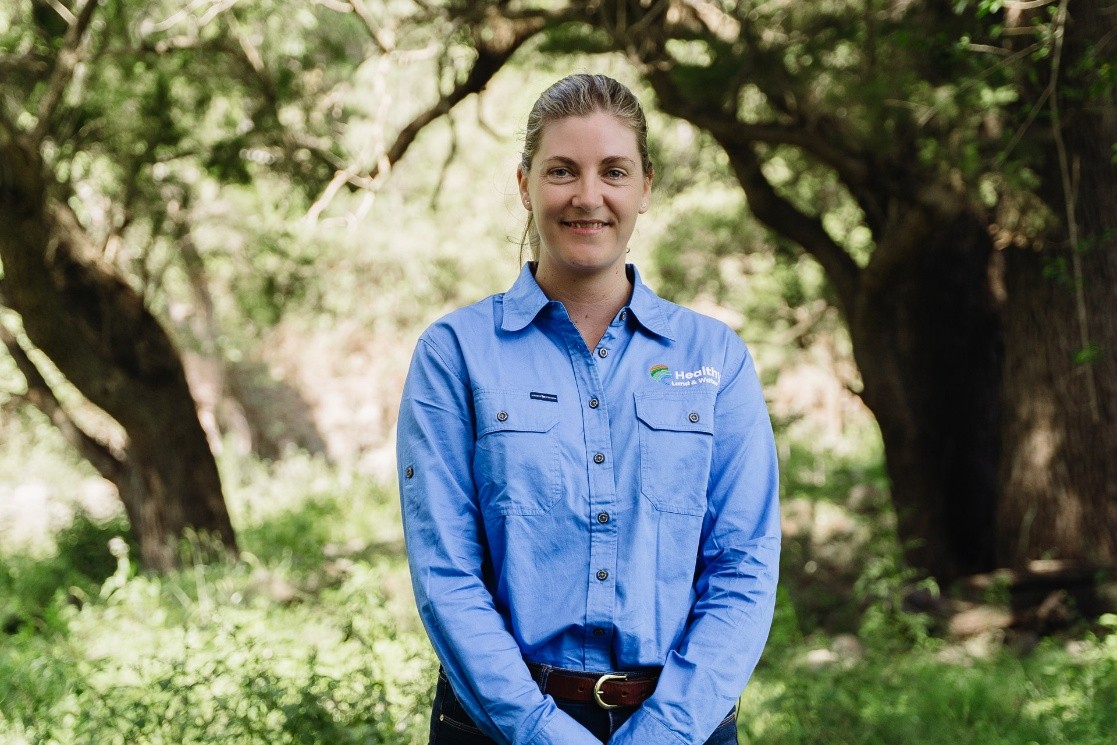 Photo: Dr Miranda Rew-Duffy, Healthy Land & Water’s Environmental Project Manager – Fire Ecology, explained the importance of fire in the landscape and how it supports healthy ecosystems and biodiversity. Credits: Joseph Bobadilla, Brown Fox Creative House.
"Fire has always been a natural part of Australia's landscape, but climate change and the loss of cultural burning have altered fire regimes, making fires more frequent and more intense. What we're doing is working directly with landholders to help them manage fire on their properties in a way that protects both people and wildlife. We develop practical, property-specific fire management plans that reduce fuel hazard while also supporting healthy ecosystems. Every property is different, so these plans are tailored to what landholders want to achieve and what's realistic for them."
- Dr Miranda Rew-Duffy, Environmental Project Manager – Fire Ecology, Healthy Land & Water
The comprehensive fire management plan for the Crosby property covers all 3,250 hectares and is supported by field data collection and camera trap monitoring to evaluate fire management effectiveness.
This is their land, and their project too
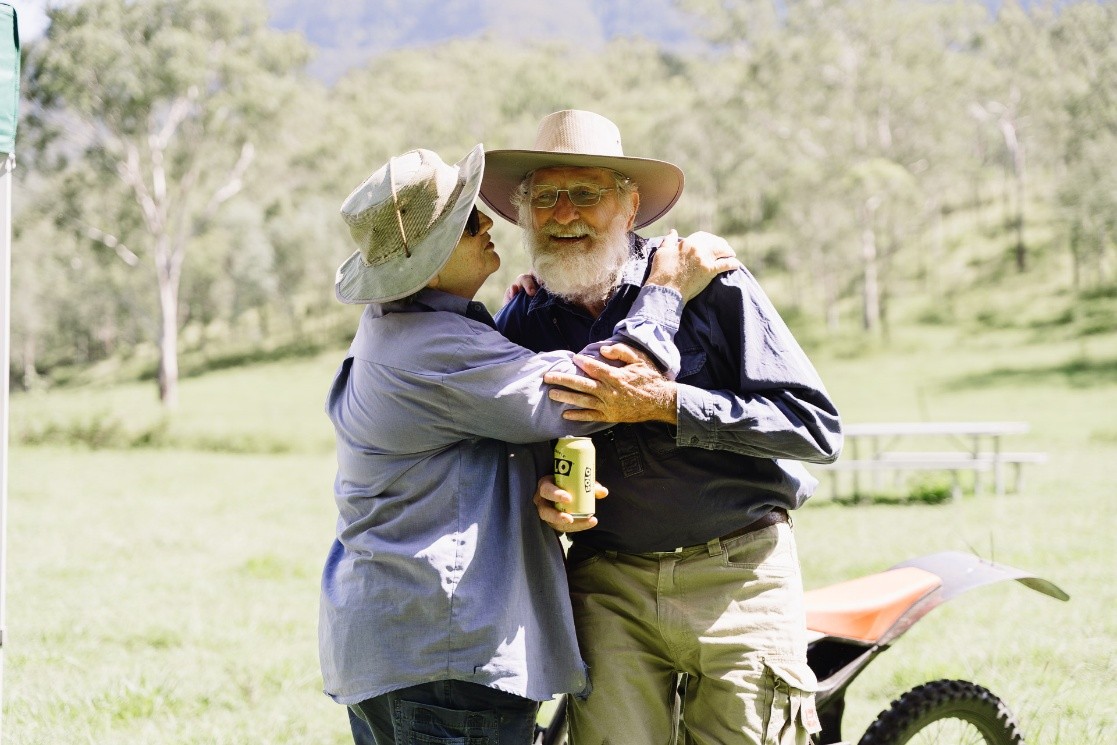 Photo: Glynn and Karen Crosby, landowners and fifth-generation graziers. Credits: Joseph Bobadilla, Brown Fox Creative House.
Glynn and Karen Crosby didn't have to open their property to this program. They chose to. Five generations of their family have worked this land, and they have already embraced ecotourism and biodiversity conservation as part of what the property is and what it offers.
"We've always loved what this property has to offer: the wildlife, the bush, the connection to nature. We want to share that. We open it up for ecotourism so more people can experience it, and at the same time, we are doing everything we can to protect the biodiversity that makes it so special."
- Glynn and/or Karen Crosby, landholders
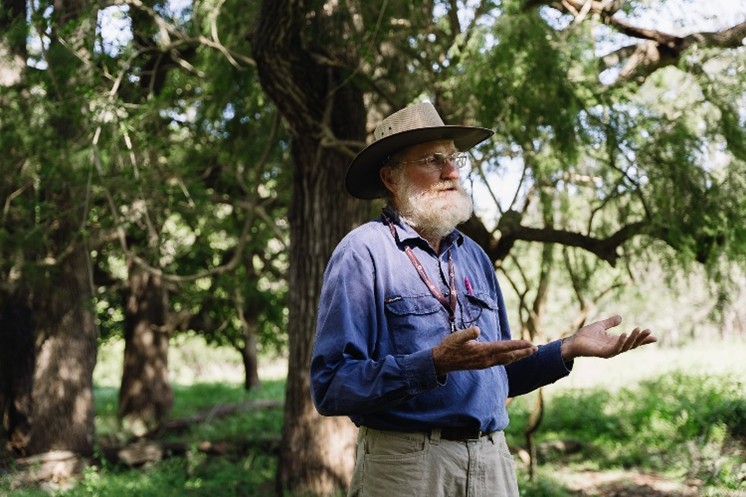
The Crosbys are already well down that path. They bring school groups onto the property to help kids disconnect from devices and spend time in nature, learning about the environment they're surrounded by. Kate, Glynn's daughter, shared the numbers: through iNaturalist, visitors to the property have logged over 4,500 observations, recording nearly 1,400 species of flora and fauna.
 |
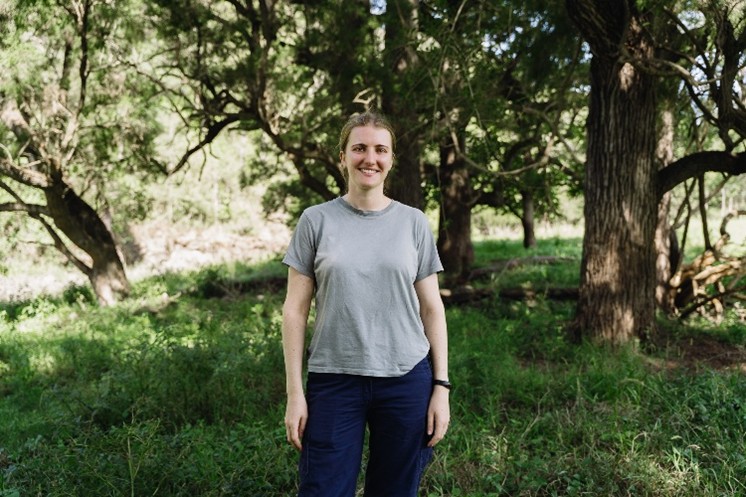 |
Photo: Glynn and daughter Kate Crosby explaining how projects like this have helped them care for their land. Credits: Joseph Bibadilla, Brown Fox Creative House.
Landholders like the Crosbys, who care deeply about their land and actively support programs like this one funded by the Queensland Government, are what make the work Healthy Land & Water does possible.
"Scale matters, place matters, and partnership matters. You have to intervene in the right places, with the right people, and keep learning and refining. That's what we're doing here today."
- Tom Lally, Land Restoration Team Leader, Healthy Land & Water
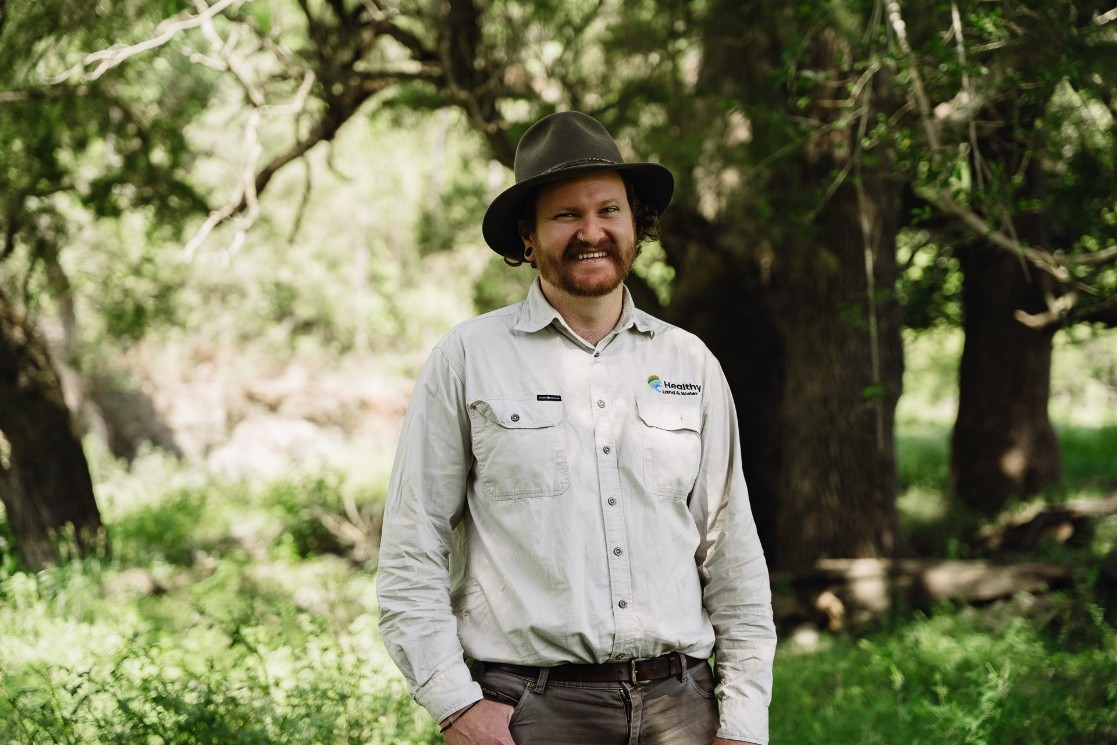 Photo: Healthy Land & Water’s Team Lead – Land Restoration, Tom Lally. Credits: Joseph Bobadilla, Brown Fox Creative House.
A big day, a big picture
By the time the day wrapped up, the group had covered a lot of ground, literally and figuratively. A detection dog mapping fox dens. Two people up a tree installing nest boxes. A fifth-generation farming family helping to shape what this landscape looks like for the next generations.
This is what the NRM investment is doing in practice, not in theory, out here on days like this one.
 |
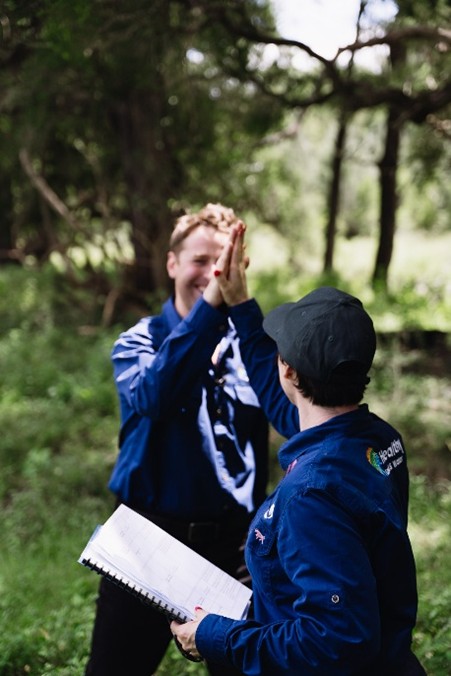 |
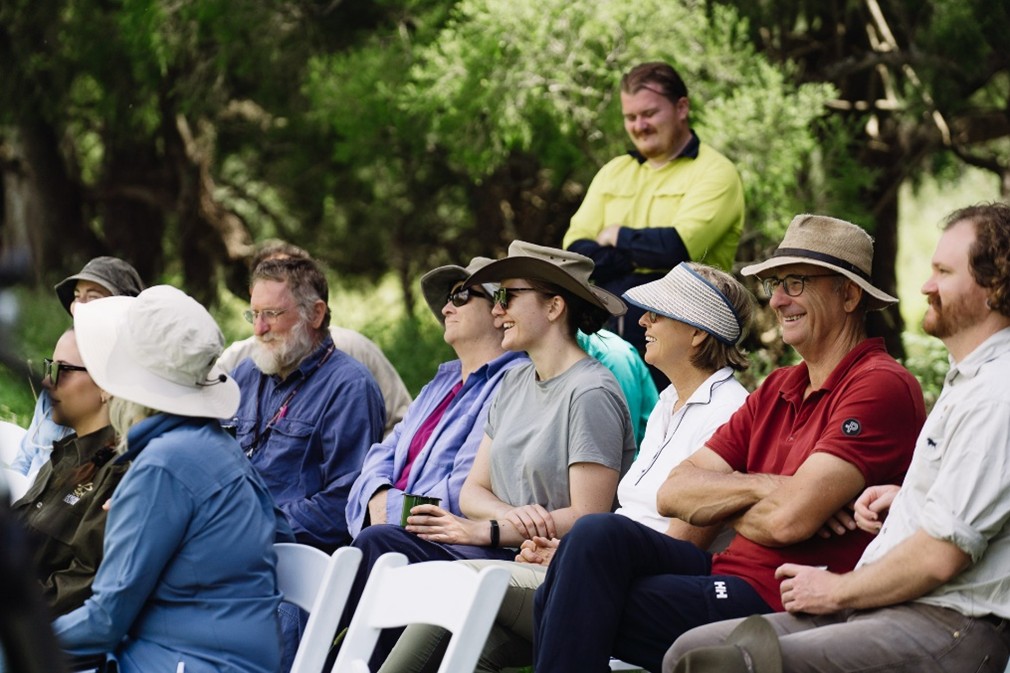
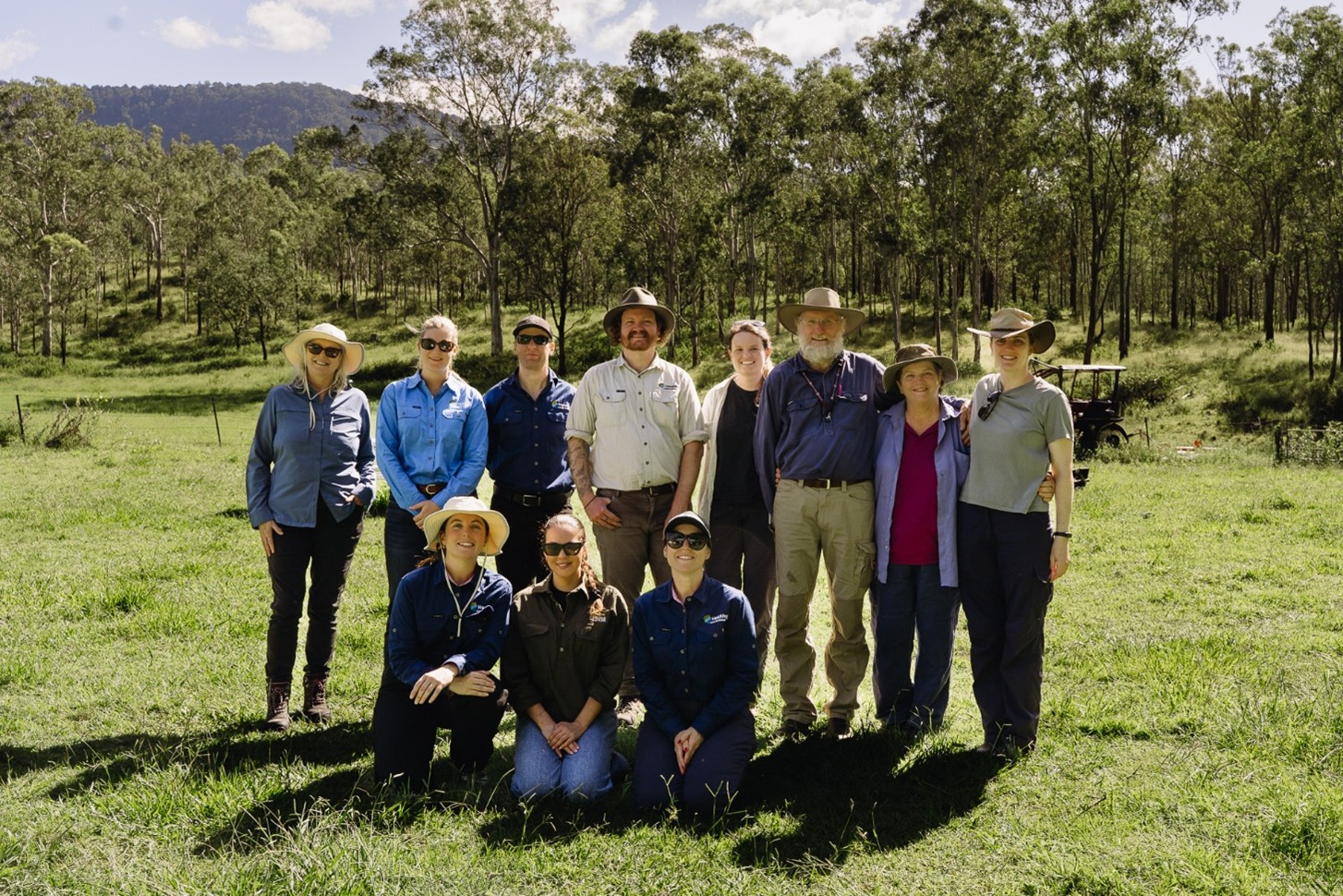 Photos: Top left, the group listening to insights about the project and its on-ground actions. Top right, Healthy Land & Water’s team is celebrating the day. Bottom group shot. Credits: Joseph Bobadilla, Brown Fox Creative House.
Watch the video below to immerse yourself into the day
Read about the project here.
Funding acknowledgement
This project is funded by the Queensland Government’s Natural Resource Management Expansion Program.
The project is delivered by Healthy Land & Water in partnership with South-East Queensland local governments, community groups, and private landholders, and aligns with the NRM Expansion Program Logic & Indicators Framework, NRM Regions QLD Plan 2024-2028, SEQ Natural Resource Management Plan 2021–2041, Queensland Biodiversity Conservation Strategy, Queensland Climate Adaptation Strategy, Queensland Matters of State Environmental Significance (MSES), Shaping SEQ 2023, and local council environmental objectives.


