
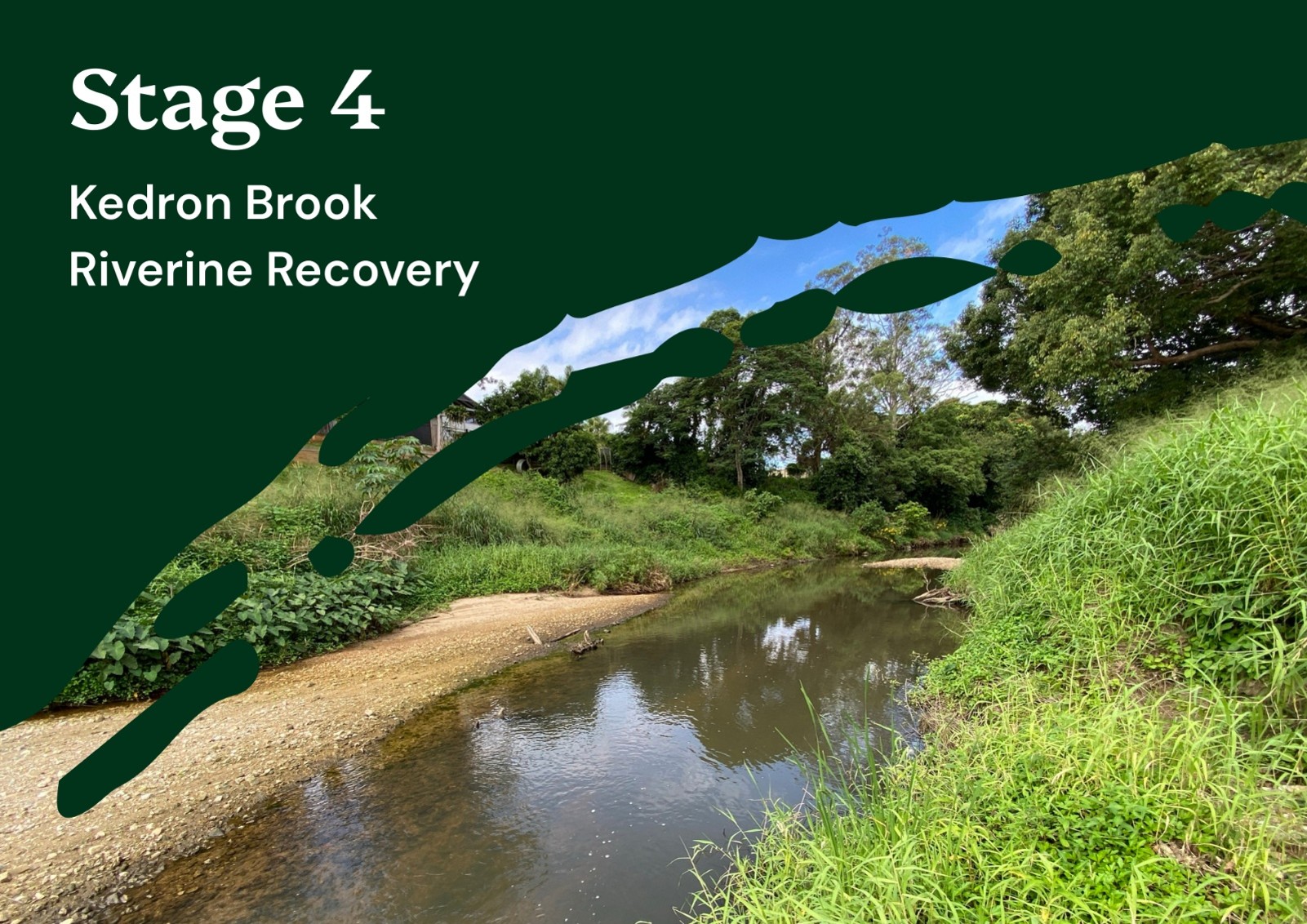
Stage 4 of the DRFA Kedron Brook Riverine Recovery Project is going ahead!
We are excited to share that Stage 4 of the Kedron Brook Riverine Recovery project is proceeding this month. We are now ready to begin the awaited on-ground construction works. This is a major milestone, and it would not have been possible without the support, patience and engagement of this community.
On-ground works are scheduled to begin late July 2026 and are expected to be completed by the end of October 2026.
What is stage 4?
Stage 4 is the on-ground construction phase of the Kedron Brook Riverine Recovery project, the stage where planning and designs become tangible, and works become visible along the Brook. This stage has been informed by the comprehensive geomorphological and ecological assessments carried out in earlier stages, as well as the feedback and insights provided by residents and stakeholders throughout the process.
The works will be delivered across three priority sites along the Brook, identified for their high potential for environmental recovery and the severity of erosion and damage sustained during the 2022 flood events.
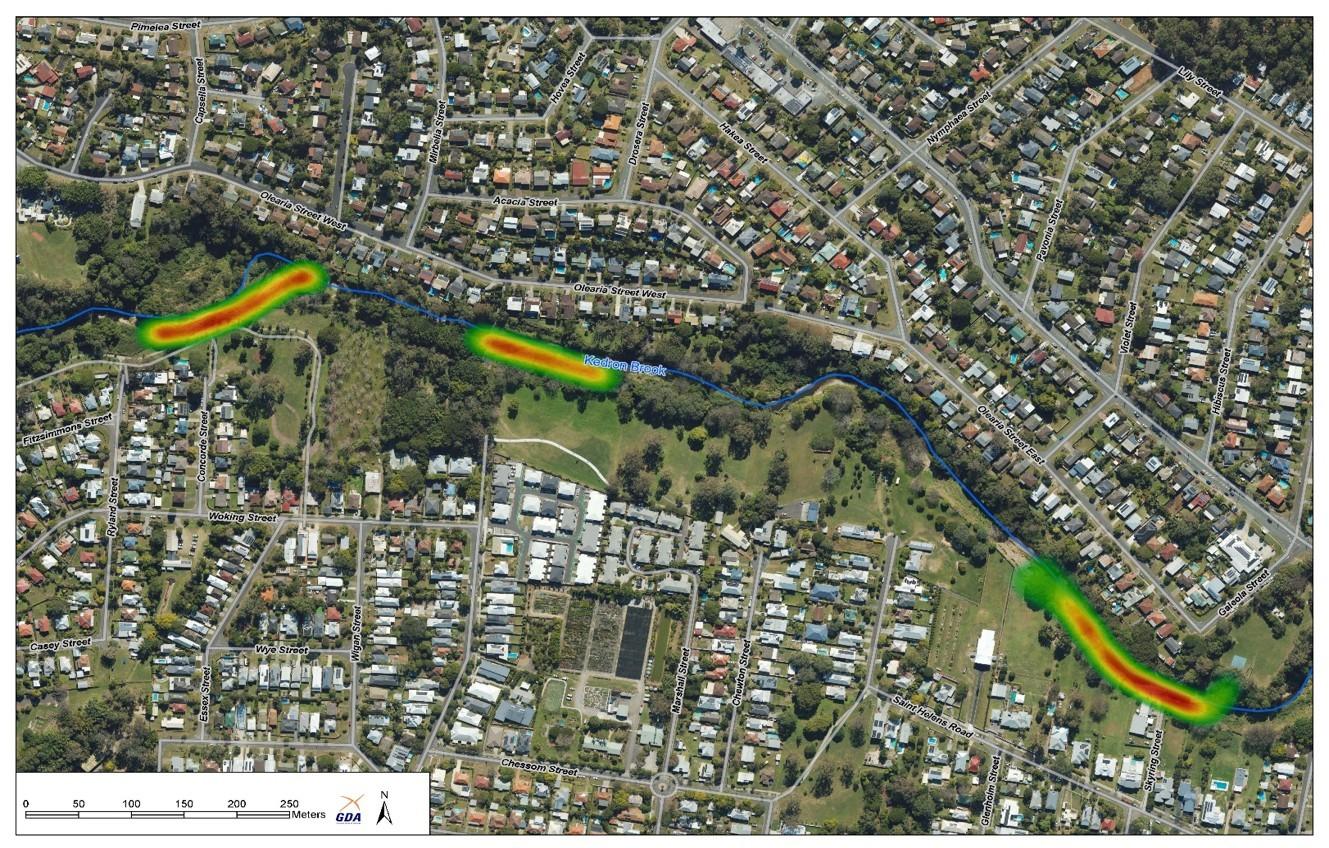 Map showing the three priority work sites along Kedron Brook. The colour gradient (red to green) indicates the relative intensity of works at each site.
Priority areas and how they were selected
Three priority areas along Kedron Brook were identified for restoration works. The selection of these sites was guided by a range of technical and practical criteria, including:
- Potential for strong environmental recovery outcomes.
- Sites of major erosion sustained during the 2022 flood events.
- Flood modelling, water energy and channel dynamics.
- Existing soil and vegetation composition.
- Historic alignments and the geomorphic trajectory of the creek.
- Construction feasibility, including site access and approval requirements.
- Broader ancillary benefits for Kedron Brook as a whole.
It is important to note that all works are confined to the creek channel and the immediately adjacent riparian areas, minimising any disruption to surrounding properties. Healthy Land & Water has been working closely with all directly impacted residents throughout this process.
While the works take place at specific locations, the benefits will extend throughout the entire Brook reach, improving resilience, ecological connectivity and long-term stability both upstream and downstream of the designated sites.
What will happen on the ground?
The construction works will utilise Nature-based Solutions designed by Bligh Tanner during Stage 2 of the project. Rather than relying on heavy engineered structures, these approaches work with the landscape and ecological processes to deliver lasting results.
Some techniques include:
- Native timber pile fields: rows of hardwood timber piles installed along the lower bank to hold the bank in place, slow water flows and redirect energy away from vulnerable areas.
- Large woody debris and root balls: natural materials placed in and near the channel to provide in-stream habitat for fish and other aquatic species, while contributing to bank protection.
- Bank regrading: reshaping steep eroded banks to gentler slopes so that native plants can establish and grow effectively.
- Coir matting and erosion controls: biodegradable matting applied to exposed soil to reduce sediment entering the creek while plants establish.
- Native revegetation: dense planting of locally appropriate native species, including fast-establishing grasses for early groundcover and shrubs and trees for long-term bank strength and biodiversity.
 |
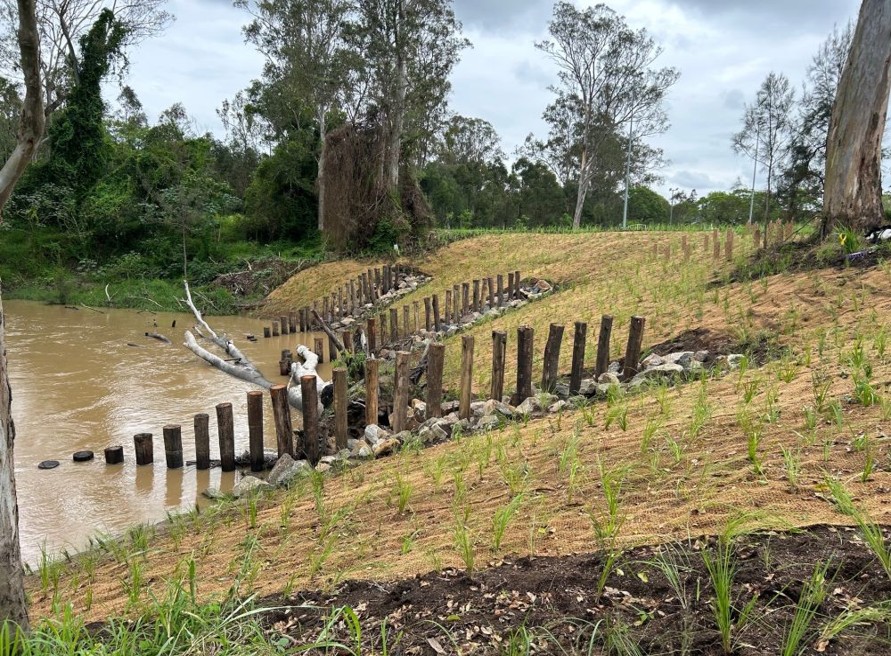 |
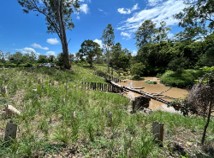
Examples of similar bank stabilisation works completed under DRFA program by Ipswich City Council and Healthy Land & Water: native timber pile fields with revegetation (left) and pile fields with rock protection and early revegetation establishment (right). Note that both of these banks were once vertical.
Why Nature-based Solutions?
Nature-based Solutions work with natural processes and ecological principles rather than against them. While traditional "hard engineering" approaches such as concrete retaining walls provide immediate stability, they can compromise ecological values, create ongoing maintenance burdens and dismiss the dynamic nature of a living waterway.
The approach taken for Kedron Brook prioritises creating the right conditions for native plants to re-establish, so their roots can hold the bank together over time and provide appropriate surface roughness. During the establishment period, when plants are most vulnerable, the timber piles, rock and other structural elements provide the protection needed for vegetation to take hold.
Evidence from similar projects in South East Queensland demonstrates that this approach delivers resilient outcomes.
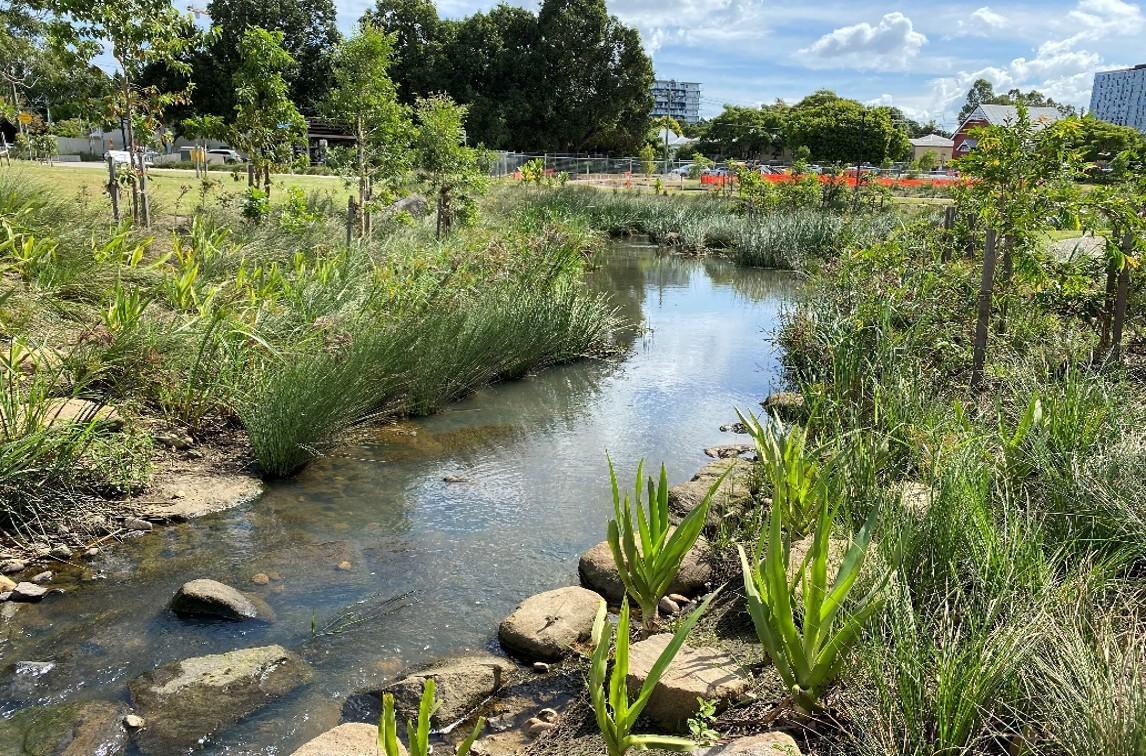 Hanlon Park/Bur’uda provides a good example of a re-naturalised creek reach supporting native vegetation following civil construction works.
Project timeline
| Key dates Works commence: July 2026 Works completed: End of October 2026 Letterbox drop to residents: Early July Signage installed at work sites: July prior to works commencement |
What to expect during construction
We want to be upfront with you about what the construction period will involve. While the team will work as efficiently and considerately as possible, there will be some temporary disruption:
- Noise - Construction activity, including machinery and vehicles, will generate noise during working hours. We will keep you updated on work schedules.
- Street and access disruptions - There may be temporary impacts to street and pathway access near the work sites while equipment and materials are moved in and out. Affected areas will be clearly signed.
- Site activity - You may see excavators and other machinery working along the Brook corridor. This is normal for this type of work and will be managed carefully to protect the surrounding environment.
All works will be carried out in accordance with the conditions of the development approval, including requirements relating to environmental protection, sediment control and working hours.
We genuinely appreciate your patience and understanding during this period. The short-term inconvenience will give way to a healthier, more resilient Brook for the whole community.
If you have any questions, please reach out directly to us at
How we will keep you informed
We are committed to keeping stakeholders and the community informed every step of the way. Here is what you can expect over the coming weeks:
- Letterbox drop – During July, we will canvas the surrounding areas with a letterbox drop, providing further details about the works, what to expect and who to contact with any questions.
- On-site signage - Closer to the works commencement date, we will install signage at the priority work sites outlining more details about what is happening, the timeline and the nature-based approach being used.
- Project website - We will continue to post regular updates at hlw.org.au/kedron-brook.
- Project email - We will continue to send updates via our newsletter and monitor the centralised email system.
Resources
A range of resources to help you understand more about environmental recovery and what this project means for the Brook are available at: https://hlw.org.au/get-involved/kedron-brook-resources
Get in touch
If you have any questions or would like to know more about the project, please don't hesitate to reach out to us:
- Email:
This email address is being protected from spambots. You need JavaScript enabled to view it. - Phone: 07 3177 9100
- Website: https://www.hlw.org.au/kedron-brook
We will continue to use the project email address to keep in touch with residents and locals who want to stay involved and updated. Thank you so much for your continued support and involvement in the Kedron Brook Riverine Recovery project.
Kind regards from the Healthy Land & Water project team,
– Hannah, Peter, Arthur, Kristy, Lachie
*Each stage is dependent on the previous stage. Should the project progress beyond Stage 3, all stages of the project are expected to be delivered by 30 June 2026.
This project is supported by Healthy Land & Water, with assistance provided through the jointly funded Commonwealth-State Disaster Recovery Funding Arrangements.


