

Celebrating five years of work towards sustainable agricultural outcomes!
A five-year program has left no sod unturned in its mission to increase the adoption of improved land management practices and promote sustainable farming in South East Queensland.
The program received rave reviews from farmers wsaying that it helped increase the long-term sustainability and production of their properties and that they were seeing benefits from the improved condition of their land.
Here is a snapshot of results from the 5 year program. The results speak for themselves.
| A 5-year program with results that speak for themselves: | |||
 |
 |
 |
 |
| Productivity & sustainability 91% reported increased long-term sustainability and production |
Preparedness & resilience |
Helpful best practice solutions
95% sold participation in the project assisted them in managing their land challenges |
More practice change in the wings
50% of landholders planning further changes to improve natural asset condition over 63,500 ha |
 |
 |
 |
 |
| Capacity building 59 workshops and field days, involving 1,569 landholders managing over 92,400 ha |
Partnership & collaboration 45 partnerships with organisations including 13 Landcare, industry groups, 11 Councils, 8 agribusinesses, QFBC, Seqwater, universities and several state agencies |
Property visits 20 property visits to assess erosion and provide detailed erosion control reports |
Property and/or fire plans 184 property management and/or fire management plans developed |
 |
 |
 |
 |
| Resources & advice 198 communications materials including fact sheets and case studies 168 farmers provided with advice |
Soil health 5 local soil health programs |
Soil health trial sites 9 soil health trial sites |
Erosion demo sites 5 erosion control demo sites |
The highly successful program we are talking about is the Regional Land Partnerships – Agriculture Program, which was funded through the Australian Government’s National Landcare Program from 2018 to 2023.
The funding has enabled us to work with over 1500 landholders through workshops, field days, and one-to-one consultations.
Over the five years, we’ve provided hundreds of landholders with up-to-date maps as well as information and tools. Working with our expert agriculture specialists, landholders have developed management plans for 184 properties, covering nearly 92,400 ha across South East Queensland.
While there has been a slight delay in the announcement of the renewal of this program, we are keen to showcase the impact over the past five years. It is no surprise that we have landholders lining up to be involved in the next round of the program.
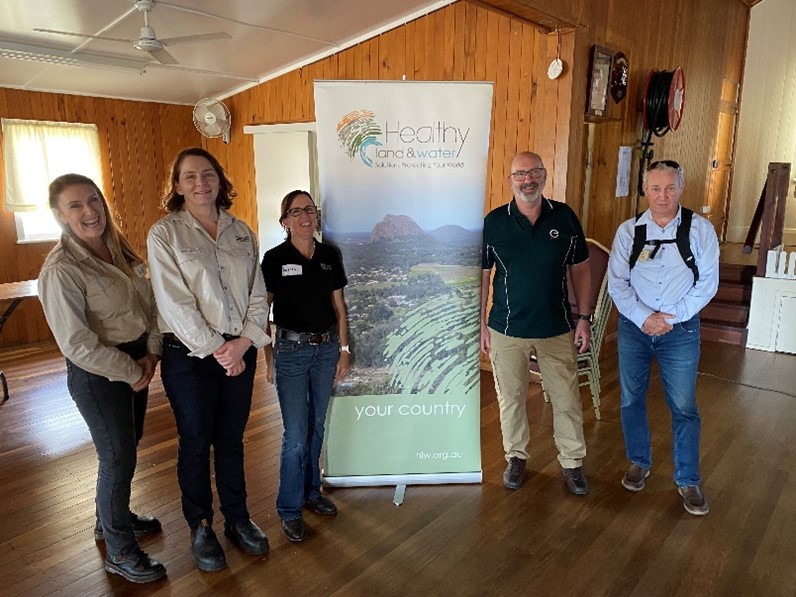 Horse management workshop Horse management workshop |
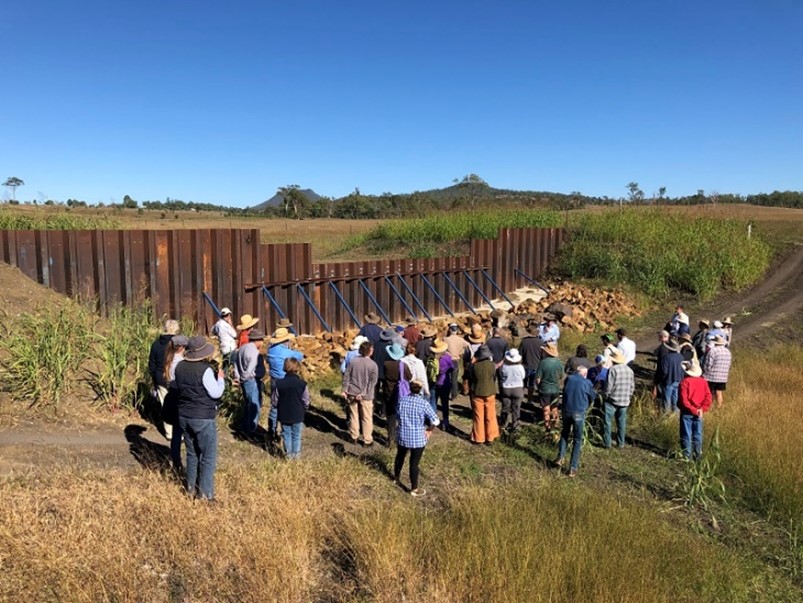 Soil conservation and erosion control workshop Soil conservation and erosion control workshop |
| Soil conservation and erosion control workshop |
Quick summary of what was delivered
Our team, in collaboration with multiple stakeholders, has empowered landholders, farmers, and community groups to implement strategies to enhance soil health, pasture and land condition, and native vegetation, which is crucial for both the region's agricultural productivity and profitability and the preservation of ecosystem values like water quality and biodiversity.
In addition to providing numerous individual reports for landholders, the program also produced three fact sheets, four case studies, and three sub-catchment Land Types booklets, which will serve as enduring resources for land managers. These documents are designed to facilitate the ongoing implementation of sustainable practices in the region.

Community engagement and capacity building
 |
 |
Over the past five years, the program has been committed to building stronger, more resilient farms, landscapes, and communities.
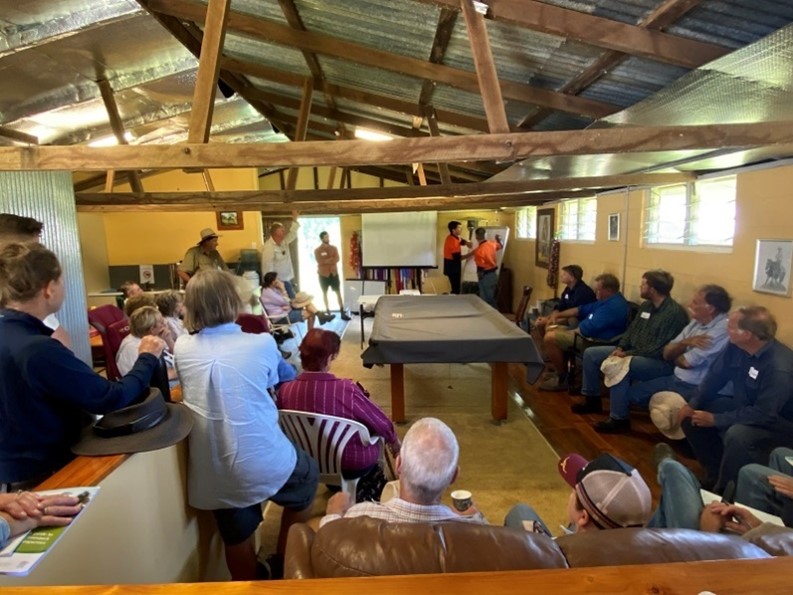
A range of activities, including over 59 workshops and field days, 13 demonstration sites, and tailored information sessions has been delivered to improve the knowledge and skills of land managers.
The aim was to promote increased adoption of management practices that protect the condition of soil and vegetation and increase landholders’ capacity to adapt to climate change.
These events, delivered under multiple subprograms, not only educated but fostered collaboration among over 800 local landholders and over 45 community groups, industry, and government partners. These were very well received, and invaluable feedback from 159 participants through a farm management survey helped shape the project's impact and effectiveness.
The soil health subprogram
 |
 |
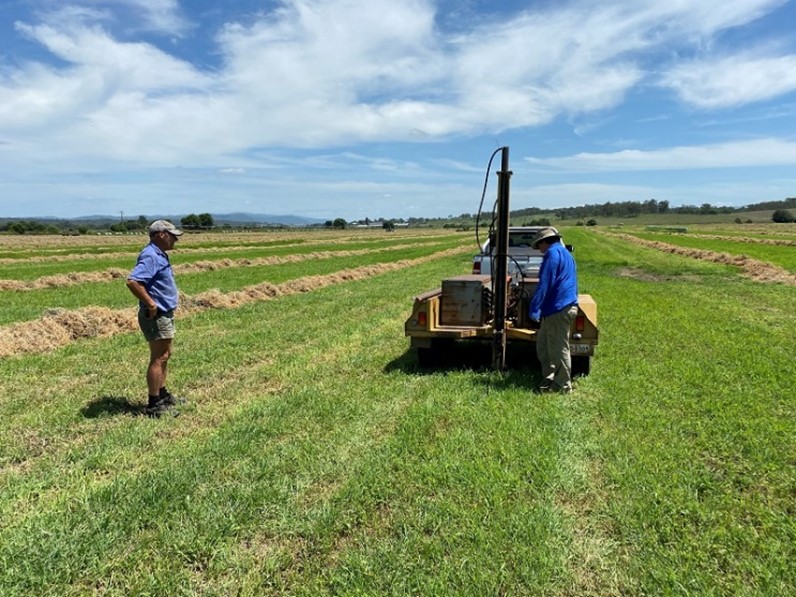
Soil health, the foundation of agriculture, has been a core focus of this program. Farmers in the agricultural areas of Lockyer, Fassifern, Logan, and Upper Brisbane valleys were engaged through workshops and on-farm soil testing at 172 sites on over 90 farms. This included follow-up interpretation and advice to improve soil health and crop and pasture production.
Ten innovative on-farm trials were established.
From demonstrating a variety of practices, including the use of precision agriculture technologies and predictive analysis of cover crops to understanding paddock variability and informing management of main horticulture crops, addressing subsoil constraints through organic amendments, and using multi-species cover crops, this subprogram has paved the way for improved and sustainable crop production.
Successful numbers:
- 92% of participating landholders who had made changes to their practices, had reported a noticeable improvement in soil health on their farms, with 45 % rating a good improvement and 10 % reporting a significant improvement.
- Show 89% of participating landholders have improved understanding & capacity to interpret soil test results.
- 93% of farmers indicated that they had improved knowledge & capacity to improve soil health on their farms.
- Landholders reported implementing practices to improve soil health over 1,335 ha with future changes planned over a further 5,800 ha.
Hillslope erosion subprogram
 Erosion control field day at Moorang Erosion control field day at Moorang |
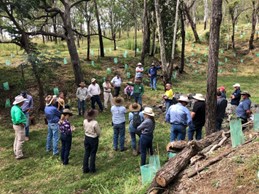 Erosion control and pasture management field day at Thornton Erosion control and pasture management field day at Thornton |
Addressing the challenge of erosion head-on, this program delivered 12 crucial field days, workshops to over 480 people managing over 48,000 ha, and property visits to undertake assessments and provide over 20 technical reports on erosion control options. The flooding events in 2022 presented new hurdles, but the team was able to complete five gully stabilisation works featuring different techniques, including constructing rock chutes, using concrete matting and battering, and revegetation works. The gully erosion control demo sites have been restored with the support of our Healthy Catchments project, safeguarding the land for future generations.
In addition to promoting cost-effective erosion control measures, workshops and field days also highlighted the importance of preventing erosion through understanding land types, soils, and their capability and limitations, carefully planning farm infrastructure, and maintaining effective ground cover and healthy diverse pastures to minimise soil and nutrient loss.
Under the hillslope erosion subprogram, we conducted a series of Equiculture workshops titled Healthy Land, Healthy Horses in collaboration with Pine Rivers Catchment Association, Brisbane City Council, Logan City Council, Redland City Council, and Scenic Rim Regional Council. These workshops collectively engaged 162 landholders and emphasised the importance of responsible land and horse care practices in our region.
We have continued to collaborate closely with Boyanda Pastoral and EnviroAg throughout the project. We are grateful for their generosity in hosting field days and for the development of a detailed case study showcasing the successful implementation of a soil conservation plan to improve the condition, resilience, and sustainability of their Mt Forbes property.
Native vegetation subprogram
 Native forest management field day at Emu Creek Native forest management field day at Emu Creek |
 Fire management planning workshop at Ravensbourne Fire management planning workshop at Ravensbourne |
Queensland is one of the most biologically diverse states in Australia, and South East Queensland is teeming with native species. Some of our native species are found nowhere else in the world!
Under this program, over 560 landholders have been supported through 24 workshops with up-to-date maps, information, and tools to develop management plans for 184 properties, covering nearly 30,000 ha.
This was achieved by:
- Partnering with our very own Queensland Fire & Biodiversity Consortium (QFBC), Queensland Fire & Emergency Services, and local councils to deliver 17 fire management information sessions and fire management planning workshops. These workshops brought together 412 landholders, offering mapping resources and information to aid them in developing comprehensive fire management plans that collectively covered over 26,626 ha of land. It was a crucial step in enhancing fire management strategies in the region which preserve biodiversity.
- Supporting a Native Forest Management field day with Private Forestry Southern Service Queensland and Emu Creek Landcare, involving 36 landholders, which aimed to improve landholder understanding, knowledge, and skills in managing native forests for improved timber production, grazing, and forest condition, and ecosystem benefits. We also recently supported a Landcare tour of Emu Creek catchment, which attracted 33 landholders. This tour aimed to encourage the adoption of recommended land management practices while increasing awareness and understanding of soil and pasture management, native vegetation preservation, waterway conservation, and the management of threats such as invasive weeds, erosion, salinity, pasture dieback, and wildfires.
- Five Rural Essentials workshops involving 83 landholders were held at a number of locations including Beaudesert, Yandina, Kin Kin, and Dayboro, with participants supported in developing Property Management Plans based on an improved understanding of their natural assets (soils, land types, native vegetation, and biodiversity) and environmental risks, from climate impacts, weeds and pests, erosion, inappropriate fire, and grazing management.
- Three valuable Land Types booklets were developed, tailored for the Pine-Pumicestone, Stanley, and Upper Brisbane sub-catchments. These booklets serve as enduring resources to support property management planning and grazing land management extension efforts, providing landholders with essential information and guidance for responsible land stewardship.
Climate adaptation subprogram
 |
 |
Climate change is a challenge that affects us all, and this subprogram delivered three Climate Adaptation workshops in collaboration with the Queensland Department of Agriculture and University of Southern Queensland climatologist Chelsea Jarvis and ClimateMate Peter Crawford.
The most recent workshop took place in Pomona and was conducted in partnership with the Noosa and District Landcare Group. A total of 22 individuals attended this event, all eager to enhance their understanding of climate drivers and gain insights into using climate information and forecasts to make more informed decisions.
The workshop delved into the management implications of anticipated climate impacts on agriculture and the environment. It offered participants valuable knowledge about how to navigate the challenges posed by changing climate patterns. The event also included a field demonstration focusing on forage budgeting, providing practical insights into sustainable land and resource management practices in the context of climate adaptation main horticulture crops, addressing subsoil constraints through organic amendments and using multi-species cover crops, this subprogram has paved the way for improved and sustainable crop production.
Survey results from landholders speak for themselves
A comprehensive end-of-program landholder survey provided key messages on the value of the program with the following learnings:
- 91% of landholders indicated that their involvement had increased long-term sustainability and production of their properties.
- 94% of landholders reported seeing benefits of improved land condition, 92% saw improved soil health and 87% saw enhanced condition of native vegetation.
- 91% of landholders indicated that their participation has led to increased resilience of enterprises and natural assets to climate change.
- 95% of landholders found that participation in project activities assisted them in dealing with challenges in managing their land.
- Overall, 75% of respondents reported implementing changed/improved management practices on their properties, with a total of over 124 projects reported across 9,295 ha and $860,000 invested.
- In addition, 50% of landholders are planning to make further changes over time to improve natural asset conditions over 63,500 ha. This provides further evidence of behavioural change and ongoing commitment to implementing recommended land management practices as a result of participating in this program.
Read the full Program snapshot here.
This program is funded but the Australian Government National Landcare Program and delivered alongside our amazing partners including farmers and landowners, local Landcare and catchment groups, peak industry bodies, agribusinesses, Queensland Fire & Biodiversity Consortium, local councils, and a variety of State Government agencies.
The Regional Land Partnership – Agriculture Program is part of a $1 billion investment across the nation from the Australian Government’s National Landcare Program, to deliver environmental and agricultural outcomes.


